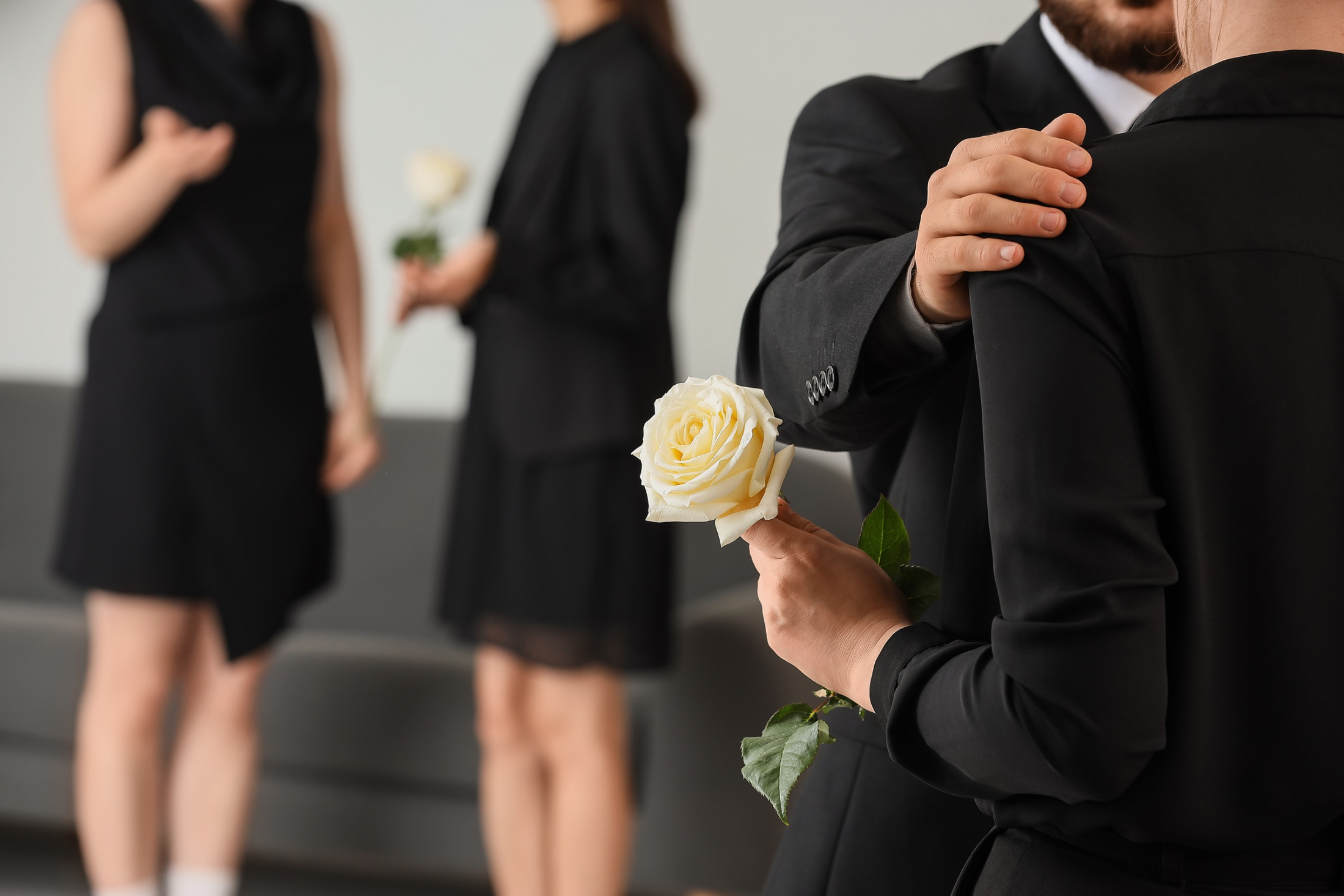
If you have never attended a viewing or funeral before, the uncertainty often begins before you leave the house.
Do I have to wear black?
How early should I arrive?
What am I supposed to say to the family?
Do I have to approach an open casket?
What happens if I am attending a Catholic Mass and I am not Catholic?
What if the family is Orthodox?
What exactly happens when someone invites me to a shiva call?
Most grieving families are not grading guests on etiquette. They are usually grateful you came.
The safest approach is simple: arrive on time, dress respectfully, follow the family’s lead, keep your condolences sincere, and remember that your presence matters more than performing every custom perfectly.
Still, knowing what to expect makes showing up easier.
Start With the Obituary or Service Information
Before deciding anything else, read the obituary carefully.
It usually tells you whether the family is holding a viewing, visitation, funeral Mass, funeral service, graveside service, memorial, celebration of life, or another gathering.
It should also tell you where and when each part takes place.
Do not assume that the viewing and funeral are at the same location.
A family might hold a viewing at the funeral home in the evening, another brief visitation the following morning, a funeral Mass at a parish church, and burial afterward at a cemetery.
Other families hold everything at the funeral home.
A Jewish funeral may move quickly to burial, followed by shiva at a family home.
An Orthodox funeral may include prayers at the funeral home, a church service, and cemetery rites.
Knowing the sequence before you arrive removes much of the uncertainty.
What Should You Wear to a Viewing or Funeral?
You do not need to own a black suit.
Black remains traditional, but respectful clothing in navy, gray, brown, dark green, or other subdued colors is generally appropriate for most funerals.
For men, that might mean a suit, dress pants with a collared shirt, or a sweater and dress pants.
For women, a dress, skirt, dress pants, blouse, sweater, or similar modest clothing works well.
The goal is not fashion.
Choose something clean, neat, and appropriate for a serious family occasion.
Avoid clothing with distracting slogans, extremely casual beachwear, or anything likely to draw attention away from the reason everyone has gathered.
There are exceptions.
A family may specifically ask guests to wear an Eagles jersey, a favorite color, bright clothing, military attire, or something connected to the person who died.
If the obituary makes that request, follow it.
Do You Have to Wear Black?
No.
This question comes up frequently because movies and television often make black clothing look like a formal funeral requirement.
It is not a universal rule.
Even within religious traditions, customs vary.
For example, Orthodox Christianity does not require mourners or visitors to wear black as a matter of church teaching, although black clothing remains customary in some cultures and families.
The better rule is respectful rather than black.
How Early Should You Arrive?
For a scheduled funeral service, arriving about 10 to 20 minutes early usually gives you enough time to park, enter quietly, sign the register if one is available, greet people when appropriate, and find a seat.
If the funeral is at a church you have never visited, allow additional time for parking.
For a viewing with a posted window such as 6 to 8 p.m., you generally do not need to arrive before 6.
You may come anytime within the announced viewing period unless the family has given you different instructions.
Try not to arrive during the final few minutes if you expect to spend time speaking with several family members.
If you arrive late to a funeral service, enter quietly and take the nearest available seat rather than walking through the room looking for someone you know.
Simple Funeral Etiquette to Remember
Arrive a little early for a scheduled service.
Wear respectful clothing unless the family requests something different.
Silence your phone before entering.
Keep condolences brief when other guests are waiting.
You do not have to approach an open casket.
Follow the family’s lead when attending a tradition unfamiliar to you.
When unsure, quietly ask the funeral director or an usher.
What Happens When You Walk Into a Viewing?
A traditional viewing or visitation usually gives friends, neighbors, coworkers, and extended family an opportunity to greet the immediate family before the funeral.
You may see a guest register near the entrance.
Sign it.
This helps the family later because they may not remember everyone who attended during an emotional and busy day.
There may be photographs, flowers, military memorabilia, religious items, video tributes, or other displays reflecting the person’s life.
The immediate family is often positioned near the casket or toward the front of the room.
You can join the receiving line, greet the family, offer condolences, and then decide whether you want to approach the casket.
You Do Not Have to Approach an Open Casket
If the casket is open, approaching it is optional.
Some visitors pause beside the casket, say a prayer, make the Sign of the Cross, kneel, or stand quietly for a moment.
Others greet the family without approaching the casket.
Both are respectful.
If you have never seen someone after death and feel uncomfortable, you do not need to force yourself.
Do not let anxiety about the casket keep you from attending at all.
You are there for the family.
What Should You Say to the Family?
You do not need a speech.
Short and sincere usually works best.
“I am so sorry.”
“I am sorry about your dad.”
“Your mother was always so kind to me.”
“I worked with Joe for twenty years. I am going to miss him.”
“I am thinking about you and your family.”
If you knew the person well, one specific memory can mean a great deal.
“Your dad always stopped to ask about my kids when I saw him.”
“I will never forget the way your mom welcomed everyone into her kitchen.”
The Remembering A Life guidance on expressing condolences emphasizes keeping the grieving person at the center of the conversation, listening carefully, avoiding assumptions, and offering specific support rather than relying on familiar scripts.
What Should You Avoid Saying?
Well intentioned phrases sometimes put pressure on the person grieving.
Try to avoid:
“Everything happens for a reason.”
“At least she lived a long life.”
“He is in a better place.”
“You need to stay strong.”
“I know exactly how you feel.”
You also do not need to ask how the person died unless the family has already chosen to discuss it.
At a viewing, your job is not to investigate the circumstances of the death.
Your job is to acknowledge the loss.
Keep the Receiving Line Moving
If twenty people are waiting behind you, this is not the moment for a fifteen minute conversation.
Offer your condolences, share a short memory, and allow the next person to approach.
If you are close to the family and want more time together, follow up later.
A text, meal, phone call, card, or visit in the weeks after the funeral often matters even more because support tends to become quieter after everyone else returns to normal routines.
What If You Are Attending a Catholic Funeral Mass?
Northeast Philadelphia has generations of Catholic families, so many neighbors eventually attend a Catholic funeral even if they are not Catholic themselves.
You are welcome to attend.
A Catholic funeral Mass generally includes Scripture readings, prayers, a homily, the Liturgy of the Eucharist, Holy Communion, and a final commendation of the person who died.
You will notice people standing, sitting, and kneeling at different times.
If you do not know when to move, follow the congregation. If kneeling is uncomfortable or unfamiliar, remaining seated respectfully is fine.
The most important etiquette question concerns Communion.
Roman Catholic practice ordinarily reserves reception of Holy Communion for Catholics properly prepared to receive it, with limited exceptions governed by church law.
If you are not receiving Communion, simply remain in the pew unless the parish gives other instructions.
Nobody expects a non Catholic guest to know every response or prayer.
Quiet participation is respectful.
What If You Are Attending an Orthodox Funeral?
Northeast Philadelphia is also home to Ukrainian, Russian, Albanian, Greek, and other Orthodox families.
An Orthodox funeral may feel unfamiliar if you have never attended one.
The service is strongly liturgical and includes repeated prayers, hymns, Scripture, incense, and petitions for the departed.
Standing is common during Orthodox worship, though seating may be available depending on the church and the needs of those attending.
You may see people making the Sign of the Cross frequently, venerating icons, or participating in customs specific to that parish or ethnic tradition.
You do not need to copy every action.
Stand or sit respectfully, remain attentive, and follow instructions from the priest, funeral director, or ushers.
Some Orthodox traditions include a final opportunity for family and friends to approach the casket, offer a farewell, venerate an icon or cross, or participate in another devotional custom.
If you are uncomfortable participating in a religious gesture outside your own faith, a quiet bow or respectful pause is enough.
Customs differ among Orthodox communities, so observation is often better than assumption.
What Is a Shiva Call?
A shiva call is not the same as attending a viewing.
In traditional Jewish mourning practice, shiva begins after the burial and creates a period when close family members mourn at home and receive visitors.
If you are invited or the family has published shiva hours, visiting is an act of comfort.
You do not need to wear formal funeral clothing, but respectful dress is appropriate.
Depending on the family’s level of observance, you may notice mirrors covered, mourners sitting on lower chairs, a memorial candle, or prayer services held in the home.
One of the most useful pieces of shiva etiquette is also one of the simplest.
Let the mourner lead.
You do not need to walk in and immediately fill the room with conversation.
Sit with them.
If they want to talk about the person who died, listen.
If they want silence, allow silence.
Do not feel pressure to bring a gift. If food is being coordinated for the family, pay attention to kosher requirements and whatever instructions the family or organizer provides.
Respect the Tradition Without Pretending It Is Yours
People sometimes become so worried about doing something wrong at a religious funeral that they imitate every gesture around them.
You do not need to.
If you are attending Mass with a Catholic family, you do not need to receive Communion.
If you attend an Orthodox service, you do not need to venerate an icon or make the Sign of the Cross if those actions are not part of your beliefs.
If you visit a Jewish family sitting shiva, you do not need to know Hebrew prayers.
Presence and respect are enough.
The family invited you because your relationship matters, not because they expect you to become an expert in their tradition before arriving.
Should You Bring Flowers?
Check the obituary first.
Many Christian and secular funerals welcome flowers.
Some families specifically ask for charitable contributions “in lieu of flowers.”
If that request appears in the obituary, respect it.
Flowers are generally not part of traditional Jewish mourning in the same way they are in many Christian funerals. A charitable donation, food when appropriate, or simply attending shiva often fits the tradition better.
Different cultural and religious practices have different expectations, which is another reason following the family’s instructions is better than relying on one universal funeral rule.
Should You Take Photographs?
Do not assume.
Some families welcome photographs of flower arrangements, memory tables, military honors, or gatherings of relatives.
Other families consider photography during a viewing or funeral deeply private.
Never photograph the person in an open casket without explicit permission from the immediate family.
Do not livestream a service, post photographs, or announce details on social media unless the family has made clear that doing so is welcome.
The safest rule is simple.
Keep the phone away unless you know the family wants photographs.
Children at Viewings and Funerals
Children do attend funerals.
The important part is preparing them.
Tell them what they are going to see. Explain whether the casket will be open. Tell them people may cry. Explain that the person who died will not move, speak, or feel anything.
Give children age appropriate choices about participation rather than surprising them after they enter the room.
A young child who becomes restless during a service is not disrespectful. It may simply be time to step outside briefly.
What Happens When the Funeral Procession Leaves?
If you are driving from the funeral to the cemetery, follow the funeral director’s instructions.
Funeral processions usually travel in a specific order, led by a funeral vehicle and hearse, with immediate family and other vehicles following.
Your vehicle may receive a funeral flag, magnet, or other identifier.
Turn on your headlights and hazard lights if instructed. Stay with the procession while maintaining a safe distance from the vehicle ahead.
The Remembering A Life guide to funeral procession etiquette advises participants to follow the funeral professional’s directions, remain in line, drive slowly, and avoid using phones or creating distractions while traveling to the cemetery.
Traffic rules and procession practices vary by jurisdiction, so follow the funeral director and lead vehicle rather than assuming every procession works the same way.
What If You Encounter a Procession While Driving?
Give it space.
Do not deliberately cut between procession vehicles.
Do not honk because the procession is moving slowly.
Do not race around it to save thirty seconds.
Yield where safely possible and allow the procession to remain together.
The people in those cars may have buried a spouse, parent, child, sibling, or friend only minutes earlier.
A small amount of patience is an easy form of respect.
What If You Do Not Know the Family’s Tradition?
Ask.
This is one of the easiest ways to avoid an etiquette mistake.
You can quietly ask the funeral director:
“I have never attended an Orthodox funeral. Is there anything I should know?”
Or:
“I am not Catholic. Should I stay seated during Communion?”
Or:
“I have never been to a shiva call. Is now an appropriate time to visit?”
These are normal questions.
John F. Fluehr & Sons explains the beginning of the arrangement process through what families can expect when meeting with the funeral home, including the information funeral directors gather and the way service preferences, faith traditions, and family wishes shape the arrangements.
Funeral professionals spend their careers helping people through situations they have never experienced before.
You are allowed to ask.
You Do Not Need to Stay for Every Part
If you attend the viewing but cannot attend the funeral, that is fine.
If you attend the funeral but cannot go to the cemetery, that is fine too.
If you stop at shiva for twenty minutes because that is what your schedule permits, your visit still matters.
People sometimes stay away entirely because they cannot attend every event.
Showing up for one part is better than deciding your presence does not count unless you can attend all of it.
When You Are the Family Making the Arrangements
Etiquette questions look different from the other side.
Families wonder how long the viewing should last, whether children should attend, how religious customs fit into the service, whether a procession is needed, and what guests will expect.
There is no single format every family must follow.
The John F. Fluehr & Sons family planning and funeral resource center brings together practical guidance on arrangements, what happens after a death, planning ahead, grief, and other questions families often encounter for the first time.
The funeral should reflect the person who died and the traditions important to the family.
The Best Funeral Etiquette Is Simpler Than People Think
You do not need to memorize a long list of rules before walking through the door.
Dress respectfully.
Arrive on time.
Silence your phone.
Say something sincere.
Listen more than you speak.
Do not force yourself to approach an open casket.
Respect religious practices without pretending to share beliefs you do not hold.
Follow the family’s lead.
Ask quietly when you do not understand something.
And remember why you came.
You came because somebody died and somebody you know is grieving.
Your neighbor will not remember whether your tie was the perfect shade of dark blue.
They are far more likely to remember that you walked through the door.
The team at John F. Fluehr & Sons is here for your whole family and includes its youngest members. Call us at (215) 624-5150.