In the Lower Northeast, families often carry more than one story at the same time. They are building lives in Philadelphia while also keeping close ties to traditions shaped by parents, grandparents, language, faith, and memory. That is especially true in growing Chinese, Vietnamese, and broader Asian communities across Rhawnhurst, Oxford Circle, Lawncrest, Mayfair, and nearby neighborhoods. When a loved one dies, those traditions matter deeply.
A funeral is never only about logistics. It is about respect. It is about family duty. It is about how grief is expressed, how elders are honored, how prayers are offered, and how a community gathers around loss. For many families, these customs are not minor details added to a service. They are the heart of the farewell.
That is why choosing the right funeral home matters so much. A Chinese funeral home Philadelphia families trust, or a Vietnamese funeral home Philadelphia families feel comfortable calling, needs to offer more than availability and paperwork. It needs to understand that mourning may involve extended visitation, incense, specific colors, clergy or temple involvement, family led rituals, and a deep sense of reverence for ancestors and elders.
At John F. Fluehr & Sons, families can turn to funeral and cremation services in Philadelphia shaped around family traditions and personal wishes. That matters because no two families carry the same customs, even when they come from the same country, speak the same language, or worship in similar ways. Good funeral care begins by listening carefully to what matters most.
Why Cultural Understanding Matters in Funeral Service
Asian funeral traditions are wide ranging and deeply varied. Some are rooted in Buddhism. Some are shaped by Taoist, Confucian, Christian, Catholic, or blended family customs. Some families place strong emphasis on ancestral rites, incense, and symbolic offerings. Others want a church centered service with cultural touches woven into it. Some prefer burial. Others choose cremation. Some want many days of visitation. Others want something shorter and more private.
What these traditions often share is a strong respect for elders, a serious view of mourning, and a belief that the funeral should be handled with care, dignity, and family presence. The broader Asian funeral traditions guide you asked me to use explains that many Asian families share themes of respect for elders, peace in the afterlife, and a deep sense of family and community connection. It also notes that Buddhist, Hindu, Taoist, Muslim, Christian, and other faith based rituals may all shape the farewell, depending on the family. That larger frame matters because it reminds people not to treat Asian funeral customs as one fixed model.
In Northeast Philadelphia, that kind of understanding is especially important. A family may speak English at work, Mandarin or Cantonese with grandparents, and another dialect or language with extended relatives. A Vietnamese household may blend Buddhist, Catholic, or ancestor centered traditions in a way that feels completely natural to them. A funeral home Lower Northeast Philadelphia families choose should be ready for that kind of complexity.
Chinese Funeral Traditions and the Importance of Respect
For many Chinese families, funeral customs are strongly shaped by respect, etiquette, and family duty. The person who died is honored not only with words, but with clear symbolic choices about the service itself. The Dignity guide to Chinese funeral traditions says these services are often steeped in solemn beauty and strict attention to custom, with etiquette around visitation, dress, color, and the overall handling of the funeral.
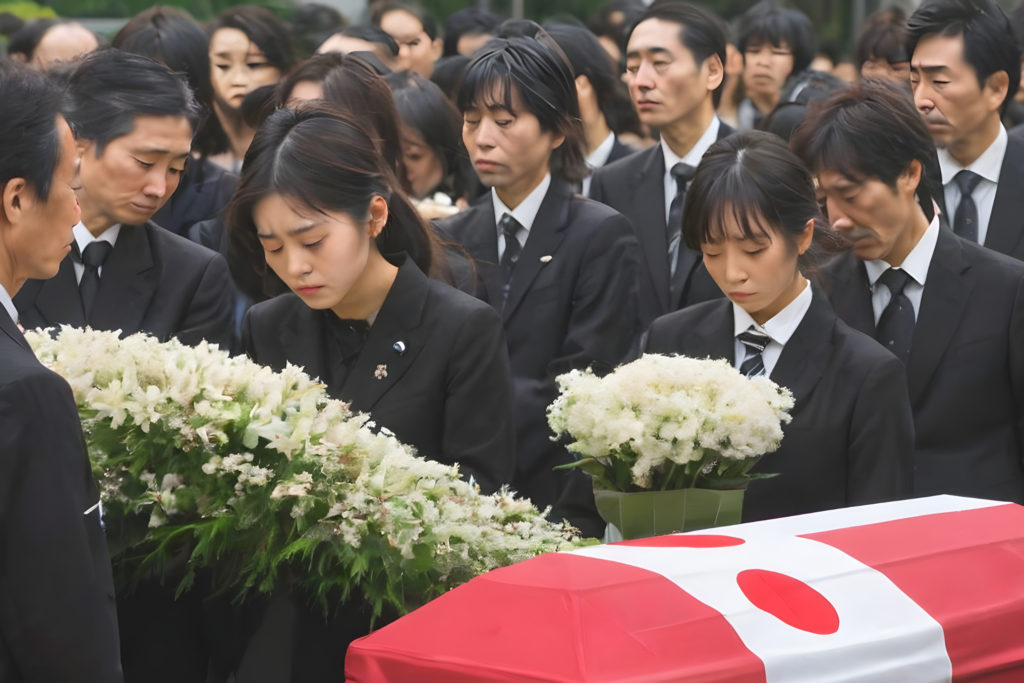
One of the most visible features in many Chinese funerals is the use of white as the primary color of mourning. White commonly represents purity, peace, and the natural cycle of life. Yellow or gold may also appear in some traditions, especially where Buddhist influence is present. Red, which is associated with joy and good fortune, is usually avoided in mourning unless the person lived to a very old age and the family is marking a long life in a more celebratory way.
Flowers often matter as well. The cultural materials you asked me to use note that white or yellow chrysanthemums are common in Chinese funeral traditions. Incense and offerings may also play a visible role, especially in families who want the service to reflect reverence for the deceased and continuity with ancestral customs. A procession to the burial or cremation place may follow, depending on the family’s preference and religious background.
These details matter because they tell the family that the service was handled with knowledge and respect. A Chinese funeral home Philadelphia families trust should understand that these visible customs are not only decorative. They carry meaning.
Extended Visitation and Family Presence
One of the strongest themes in the Asian funeral traditions page is extended visitation. It notes that in many Asian cultures, families may prefer several days of visitation and may wish to remain close to their loved one throughout that period. That kind of closeness often reflects deep reverence for elders and a belief that the family should not be separated too quickly from the person who died.
This matters in practical ways. Some families want a longer wake or viewing. Some want a room where relatives can gather in shifts, pray, speak quietly, and remain present for extended periods. Some want the casket open, because seeing the person one last time is understood as a necessary act of respect and closure.
For families unfamiliar with these traditions, a longer visitation may seem unusual. For the family living it, it may feel essential. It gives people time to arrive, mourn, offer respect, and move through the first stage of grief together. It also reflects the understanding that funeral service is not only one scheduled event. It is a period of family duty and communal care.
Vietnamese Funeral Traditions and the Role of Family
Vietnamese funeral traditions also place strong emphasis on family, ritual, and respect for the person who has died. The exact customs vary from family to family and often reflect religion, region, and generation. In many households, the service may include Buddhist prayer, Catholic elements, ancestral remembrance, incense, a strong family presence, and clear mourning practices that continue after the funeral itself.
One of the most important things to understand is that no single pattern fits every Vietnamese family. Some families may want monks or clergy involved. Some may want a more church centered service. Some may prefer burial. Others may choose cremation with memorial rituals afterward. Some may want a wake that includes prayer, food, and extended family presence over more than one day.
That is why cultural respect matters more than assumptions. A Vietnamese funeral home Philadelphia families feel comfortable with should not begin by guessing. It should begin by asking. What faith tradition matters most here. What language should be used in key conversations. Are there prayers, incense, an altar space, clothing customs, or mourning practices the family wants honored. Those questions build trust.
For many Vietnamese families, the funeral is not only about one day. It is also about the mourning period that follows, the prayers said afterward, and the ongoing remembrance of the person within family life. That longer view of loss is one reason a simple, rushed service often feels inadequate to families who want to honor their traditions well.
Buddhist Influence and Spiritual Symbolism
Many Asian funeral traditions, including some Chinese and Vietnamese services, may include Buddhist influence even when the family’s full identity is more culturally blended. The Asian funeral guide you asked me to use notes that yellow or gold may symbolize spiritual purity in Buddhist traditions and that incense is often used to create a sacred space, express respect, and symbolize a bridge between the physical world and the spiritual realm.
That symbolism matters because it shapes how the room feels. Incense, candles, flowers, chanting, prayer, quiet bows, and ritual gestures often help mourners move through the service in a way that feels spiritually grounded. For some families, these acts are essential. For others, they are present in smaller ways, such as a moment of incense, a table with photographs and offerings, or a Buddhist prayer woven into a broader memorial.
This is one reason Buddhist funeral services Philadelphia families ask about should never be treated as interchangeable with a generic service. The family may want a funeral home that understands how to create space for spiritual practices without making them feel like an afterthought.
Open Casket, Presentation, and the Final Viewing
The broader Asian traditions guide also notes that an open casket is common in many Asian funeral settings and is often understood as a sign of respect. It gives family and friends a final opportunity to see the person, pay direct respects, and feel that the loved one has been presented with dignity and care.
For some families, this final viewing is one of the most important moments in the entire funeral process. It is where grief becomes real. It is where younger relatives who live far away arrive and stand with the rest of the family. It is where people say goodbye in the most direct way possible.
Because of that, preparation matters deeply. Clothing, hair, flowers, the placement of family objects, and the overall feeling of the room often matter a great deal. A family may not use many words to describe what they need, but they know immediately when the setting feels respectful and when it does not.
Mourning Periods and Ongoing Remembrance
For many Asian families, mourning does not end with the burial or cremation. It continues in more formal or visible ways afterward. The Chinese funeral traditions page notes that customs may include clear etiquette and practices that carry beyond the day of the service. The broader Asian traditions page also describes returning to the gravesite, prayer, and continuing acts of remembrance as part of the wider mourning experience.
This matters because some families may want the funeral home to understand not only the service itself, but also the larger rhythm of remembrance. That may include anniversary observances, prayer at home, cemetery visits, memorial tablets, offerings, or family gatherings that honor the person over time. These are not separate from the funeral. They are part of the same continuing bond.
For families in Philadelphia, especially those with relatives abroad, this longer mourning period can also connect local customs with traditions carried from another country. The funeral becomes one moment in a longer chain of remembrance.
Why Bilingual Communication Makes a Difference
One of the most practical and meaningful needs many families have is clear language support. A bilingual funeral home Philadelphia families trust does not only make translation easier. It lowers stress at a moment when every decision already feels heavy.
Older relatives may be most comfortable in Mandarin, Cantonese, Vietnamese, or another language spoken at home. Adult children may move between English and a heritage language. Younger relatives may understand family customs but not always know the exact words for funeral planning. In those moments, patient communication matters as much as any other part of the service.
Even when a funeral home is not fully multilingual in every language a family uses, a respectful approach still matters. Families should feel free to explain what they need, ask questions, and bring in clergy, elders, or trusted relatives who can help guide the process. The goal is not perfect cultural sameness. It is respectful understanding and room for the family’s real needs.
How Fluehr Approaches These Traditions With Respect
John F. Fluehr & Sons serves a part of Philadelphia where many communities live close together and bring different traditions into the same neighborhoods. That is why local flexibility matters. A service for one family may center on church prayer and burial. Another may include extended visitation, incense, mourning colors, Buddhist or ancestral customs, and a more family led ceremonial tone.
Fluehr’s service overview makes clear that the funeral home offers traditional funerals, graveside services, cremation, memorial services, and guidance shaped to the family’s preferences and budget. That flexibility is important because Chinese, Vietnamese, and broader Asian families often want a service that reflects both practical needs and cultural meaning. Some may want a very traditional path. Others may want a blended service that honors heritage while fitting the realities of life in Philadelphia.
When families need to talk through those choices directly, they can start by contacting John F. Fluehr & Sons on Cottman Avenue. The funeral home’s contact page lists 3301 Cottman Avenue, Philadelphia, Pennsylvania 19149 and the phone number (215) 624-5150, giving local families a clear point of connection when a need arises.
A Funeral Should Feel Like the Family It Honors
The strongest funeral services never feel generic. They feel like the family. They reflect the right colors, the right prayers, the right pacing, the right balance of sorrow and reverence, and the right space for loved ones to gather. For Chinese, Vietnamese, and other Asian families in Northeast Philadelphia, that often means a funeral that treats elders with visible respect, honors spiritual customs, welcomes family presence, and makes room for grief to be carried in community.
That is why cultural literacy matters. Families should not have to leave important traditions at the door in order to receive good funeral care. They should be able to say what matters, see it respected, and know the service reflects both their loved one and their heritage.
At John F. Fluehr & Sons, we respect the traditions of every community we serve. We welcome Chinese, Vietnamese, and all Asian families to call us at (215) 624-5150.