Some neighborhoods celebrate fall with a pumpkin on the porch.
Tacony closes part of Torresdale Avenue.
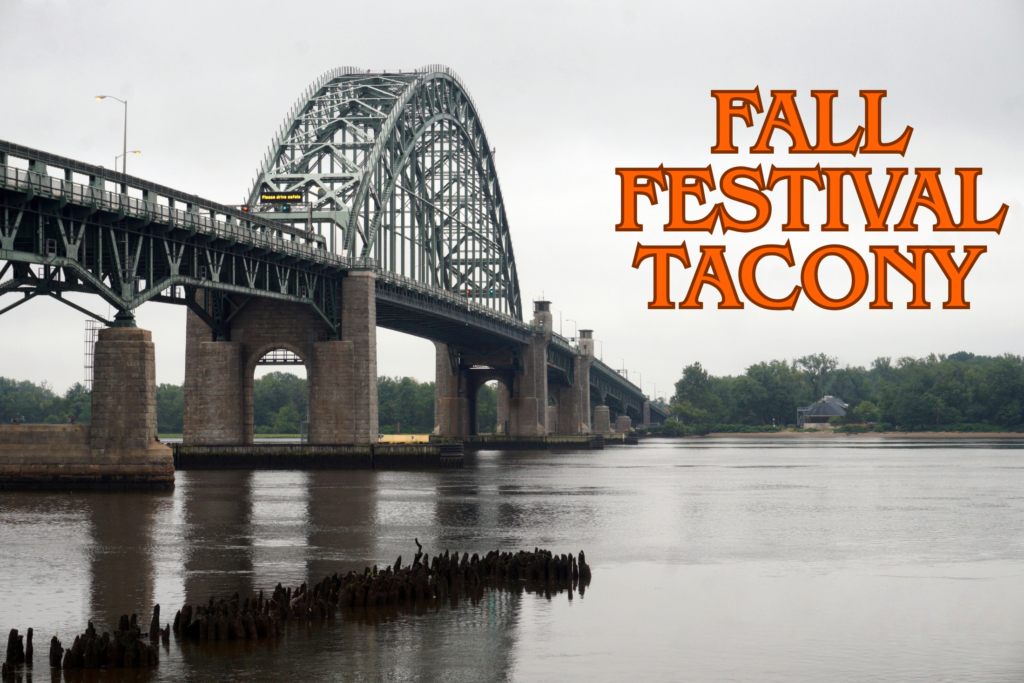
On Saturday, October 24, 2026, the Tacony Fall Festival returns to the 6700 block of Torresdale Avenue from noon to 6 p.m. The neighborhood gathering brings together families, local businesses, community organizations, costumes, candy, music, games, and the kind of street level energy that still feels completely natural in Northeast Philadelphia.
It is the sort of afternoon where children recognize classmates in costume, parents run into people they have not seen since last fall, local businesses set up outside, and neighbors linger much longer than they planned.
That is part of what makes fall in Tacony and nearby Mayfair worth paying attention to. These neighborhoods still know how to turn an ordinary street into a gathering place.
The event itself matters. So does what it represents.
In a city where neighborhoods often carry stronger identities than ZIP codes, traditions like the Tacony Fall Festival, Halloween decorating contests, community celebrations, and seasonal events keep people connected to the blocks where they live.
The 2026 Tacony Fall Festival Takes Over Torresdale Avenue
The Tacony Fall Festival is scheduled for Saturday, October 24, from noon to 6 p.m. along the 6700 block of Torresdale Avenue.
The 2026 celebration is the 12th annual neighborhood festival and part of the wider Fall for Tacony series. The focus is unmistakably autumn and Halloween, with local businesses distributing candy and a community costume contest bringing families onto the avenue.
The Tacony Community Development Corporation has built a broader calendar of neighborhood events around this same idea. The organization describes its annual Halloween celebration as its largest event of the year, with Torresdale Avenue closed for performances, family activities, trick or treating, and costume festivities.
Families wanting to keep up with neighborhood programming can use Visit Tacony for local events, businesses, and community happenings throughout the season.
The appeal is simple. You do not need to leave the neighborhood to feel like something is happening.
A Fall Festival That Still Feels Like a Neighborhood Event
There is a difference between attending a large city festival and walking into a neighborhood event where half the people seem to know one another.
Tacony still has the second kind.
Local businesses participate because these are the same people who walk through their doors during the rest of the year. Community organizations set up tables because they serve the same blocks. Parents recognize teachers, neighbors, business owners, civic volunteers, and familiar faces from the library.
Children do not experience the event as a marketing campaign. They experience it as Halloween taking over the street.
That atmosphere is hard to manufacture.
It grows slowly through years of people showing up.
Torresdale Avenue Has Been a Gathering Place for Generations
Tacony’s community life did not begin with modern festivals.
The neighborhood has a long history tied to industry, transportation, local commerce, and civic institutions. The name Tacony itself reaches back far beyond modern Philadelphia, with roots connected to the Lenape language.
During the nineteenth century, Tacony became an important transportation point along the Philadelphia and Trenton Railroad. At one stage, passengers traveling toward central Philadelphia transferred between rail and boat service here.
The arrival of Henry Disston and the growth of the Disston saw works reshaped the neighborhood further. Homes, institutions, businesses, and community spaces grew around the industrial life of Tacony.
Torresdale Avenue eventually became the neighborhood’s primary commercial corridor, helped in part by trolley service that shifted business activity toward the avenue.
People interested in the neighborhood beyond one fall afternoon can explore the Historical Society of Tacony and its record of the community’s past, including stories about transportation, industry, architecture, and the institutions that shaped the area.
That history gives today’s fall festival a little more context.
People are gathering on a commercial corridor where generations before them also shopped, traveled, worked, and met their neighbors.
Why Closing a Street Still Feels Special
There is something different about seeing a street normally filled with cars handed back to people for an afternoon.
Children walk down the middle of the block.
Businesses step outside.
Neighbors stop instead of passing through.
Music carries farther than normal. Families move slowly because there is no need to get anywhere quickly.
A familiar street suddenly feels like a public square.
That experience is part of why neighborhood festivals remain valuable even when Philadelphia offers larger events almost every weekend.
A community does not always need something enormous.
Sometimes it needs the avenue closed for six hours.
The Costume Contest Is More Than a Few Prizes
Halloween is one of the easiest holidays for a neighborhood to share because participation does not require much explanation.
A four year old arrives dressed as a dinosaur. A teenager has spent three weeks working on a costume. Parents improvise something at the last minute. Someone brings a dog wearing a cape. Another family arrives in matching costumes and immediately becomes the group everyone wants a photograph with.
Tacony’s costume contest turns that creativity into part of the festival itself.
It also gives children a reason to participate rather than simply walk through.
The best neighborhood events understand this. People remember what they did more than what they watched.
They remember entering the costume contest, decorating something, collecting candy, playing a game, hearing a local band, or running into a friend unexpectedly.
Halloween Decorating Keeps the Celebration on Residential Blocks
The community spirit does not stop when the festival ends.
Across Northeast Philadelphia, Halloween has long had a second stage on the residential blocks. Neighbors decorate rowhomes, twins, porches, windows, trees, railings, and front lawns. Some displays involve little more than a carved pumpkin. Others become full productions.
Mayfair has a history of neighborhood Halloween decorating contests that turn ordinary streets into informal evening tours for families.
The competitive part is fun, but the better part is what happens around it.
People walk blocks they would normally drive. Parents point out favorite houses to their children. Neighbors stand outside talking. Someone adds another strand of lights because the house down the street raised the standard.
It becomes one of those small neighborhood traditions where participation matters more than winning.
Mayfair Understands the Value of Decorating a Neighborhood Together
Mayfair has long embraced community decorating beyond Halloween too.
The neighborhood is known for residential Christmas decorating contests that have drawn large numbers of participating homes and encouraged families to walk or drive through the area to see the displays.
That same instinct carries into fall.
Decorating a house is technically private. Once an entire block starts participating, it becomes public.
A skeleton on one porch encourages a ghost across the street. A neighbor adds orange lights. Someone puts pumpkins on every front step. By Halloween week, the block has become its own event.
For children growing up in Mayfair or Tacony, those details become part of how they remember the neighborhood.
They remember which house gave out full size candy bars.
They remember which porch was too scary to approach alone.
They remember walking with cousins, school friends, and parents carrying coffee.
Those memories rarely appear in official neighborhood histories, but they are still part of what makes a place feel like home.
Tacony and Mayfair Have Different Histories but Similar Neighborhood Habits
Tacony and Mayfair are not interchangeable neighborhoods.
Tacony’s history reaches deeply into nineteenth century industrial Philadelphia and the Disston era. Mayfair developed later, growing strongly during the twentieth century as Northeast Philadelphia expanded.
Yet both neighborhoods share something familiar.
They still use public life to reinforce neighborhood identity.
Festivals matter. Business corridors matter. Libraries matter. Civic organizations matter. Holiday traditions matter. Decorated houses matter.
Most importantly, people still show up.
Local Businesses Are Part of the Festival, Not Background Scenery
A street festival works differently when local merchants are involved.
The shops and restaurants along Torresdale Avenue are not temporary vendors arriving for one weekend. They are part of the commercial life of Tacony throughout the year.
When local businesses hand out candy, participate in events, sponsor activities, or support community programming, the festival becomes an extension of the neighborhood rather than an attraction placed on top of it.
That relationship is worth protecting.
Strong commercial corridors give neighborhoods places to meet casually. A bakery, restaurant, barber shop, market, coffee shop, or small retail business does more than sell something. Over time, it becomes a familiar point on the map.
Community events encourage residents to look again at businesses they pass every day.
The Tacony Library Helps Anchor the Celebration
The Tacony Library at 6742 Torresdale Avenue sits near the center of much of this activity.
Libraries have always worked particularly well as neighborhood anchors because almost everyone belongs there.
Children use them. Seniors use them. Families attend programs. Students come after school. Community groups gather there. People walk in without needing to buy anything.
That makes the library a natural home base for a festival built around community rather than commerce alone.
Past Tacony Halloween celebrations have included library programming alongside outdoor activities, performances, games, arts projects, and trick or treating.
That mix is one reason the event feels accessible to different generations.
Autumn Is When Northeast Philadelphia Feels Most Like a Collection of Neighborhoods
Fall has a way of bringing local identity forward.
School is back. Summer travel slows down. Football is on. Porches start changing from summer flowers to pumpkins and mums. Parish events, school fundraisers, community festivals, Halloween gatherings, and civic activities begin filling weekends.
People spend more time close to home.
In Tacony, that means Torresdale Avenue.
In Mayfair, it might mean Frankford Avenue, Cottman Avenue, or a residential block where neighbors have decided Halloween decorations are becoming increasingly competitive.
The geography is small, which is exactly the point.
A neighborhood tradition works because people do not need directions.
Why Community Traditions Matter After So Many Years
Neighborhoods change constantly.
Families move. Businesses close. New businesses open. Languages change. Schools change. Houses are sold. Children grow up and leave, then return years later with children of their own.
Traditions create a thread between those different versions of the neighborhood.
A festival does not freeze Tacony in the past. It gives today’s residents something they share with the people around them now.
That distinction matters.
Community is not only remembering what a neighborhood used to be.
It is giving people a reason to participate in what it is today.
Fluehr’s Own Story Runs Through the Same Part of Philadelphia
John F. Fluehr & Sons has its own long connection to Northeast Philadelphia.
The business began in Philadelphia in 1898, expanded into Mayfair in 1930, and has operated from its Cottman Avenue location since 1937. The surrounding neighborhoods changed enormously during those decades, but the idea of serving people close to home remained central.
Families interested in that local history can read the story of John F. Fluehr & Sons and its Northeast Philadelphia roots.
That history is one reason community posts like this belong here.
A neighborhood funeral home does not exist separately from the neighborhood. It knows the same streets, churches, parks, businesses, schools, and annual traditions families know.
Fall for Tacony Is Really an Invitation to Come Outside
The easiest way to understand the Tacony Fall Festival is to attend it.
Come down Torresdale Avenue on October 24.
Watch children compare costumes.
Stop at the local business tables.
Listen to the music.
Say hello to somebody you recognize.
Walk a block you normally drive.
Then, later in the week, take a ride through Mayfair and see which houses have decided Halloween deserves more lights, more pumpkins, or one more skeleton than last year.
None of this needs to be profound.
That is part of its charm.
The Neighborhood Is the Event
Philadelphia has plenty of places to go in October.
Tacony offers something different.
It offers a reason to stay close.
The Fall Festival puts families on Torresdale Avenue together. Halloween decorations carry the season onto residential blocks. Local businesses participate. Libraries, civic organizations, neighbors, and families all become part of the same afternoon.
That is what neighborhood life looks like when it is working.
People do not only live near one another.
They occasionally close the street and celebrate together.
For Northeast Philadelphia families looking for information on planning ahead, family support, grief, and other practical topics, John F. Fluehr & Sons’ family planning and resource center brings helpful guidance together in one place.
The team at John F. Fluehr & Sons is here for your whole family and includes its youngest members. Call us at (215) 624-5150.