September carries a particular weight in Jewish homes this year.
Rosh Hashanah begins at sundown on Friday, September 11, 2026, and continues through Sunday evening, September 13. Yom Kippur begins at sundown on Sunday, September 20, and ends the following evening. Together, the High Holy Days create a season of reflection, repentance, prayer, family, memory, and renewal.
For Jewish families who have lost someone they love, memory has an especially visible place during this season. Yizkor, the traditional Jewish memorial service, is recited on Yom Kippur. The prayers connect personal grief with generations of Jewish remembrance and give mourners a formal moment to speak inwardly to the memory of parents, spouses, children, siblings, relatives, and others who have died.
In Rhawnhurst, Bustleton, and throughout Northeast Philadelphia, Jewish mourning traditions are also part of neighborhood life. A non Jewish friend might receive an invitation to a funeral and wonder what to expect. A neighbor might hear that a family is sitting shiva and wonder whether a visit is appropriate. A grandchild might attend an unveiling without understanding why the family has returned to the cemetery months after the funeral.
Understanding these customs helps people enter those moments with respect.
Rosh Hashanah Begins a Season of Reflection
Rosh Hashanah is the Jewish New Year and the beginning of the High Holy Day period. The holiday opens the Ten Days of Repentance, which culminate in Yom Kippur.
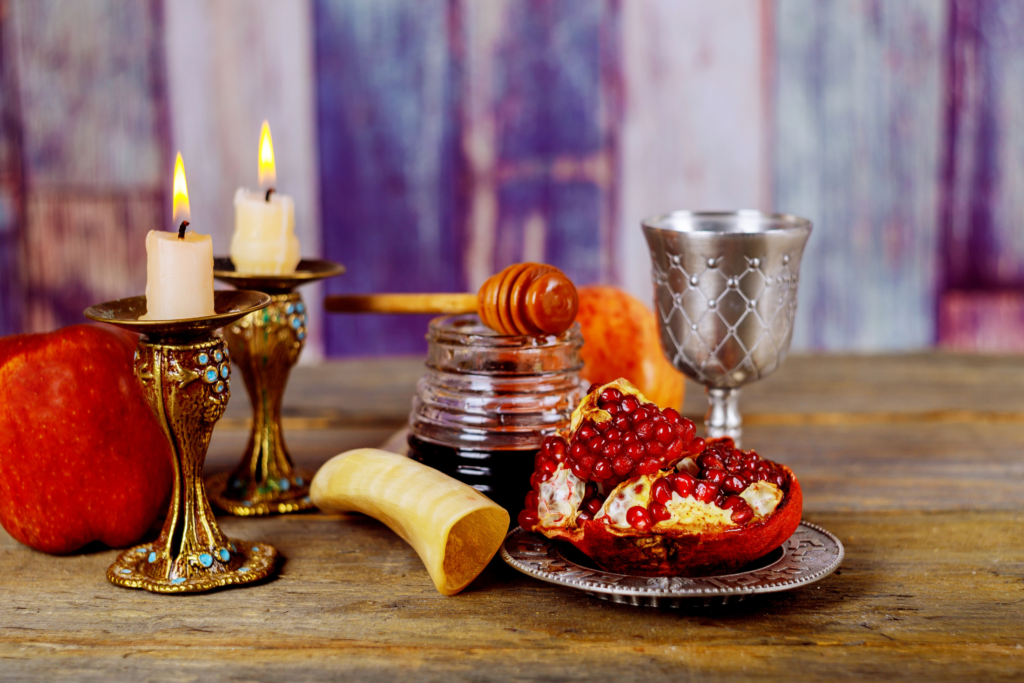
The themes are larger than celebration alone. Families gather, pray, hear the shofar, share meals, reflect on the year behind them, and consider the year ahead. Traditional foods such as apples and honey express hope for a sweet new year.
Memory naturally becomes part of that reflection, especially in a household where someone is missing from the table.
A first Rosh Hashanah after the death of a parent or spouse often feels different. A familiar recipe carries more meaning. A synagogue seat is empty. Someone else says the blessing Grandpop always said. A family tradition suddenly has one fewer voice participating in it.
Yizkor itself is not traditionally recited on Rosh Hashanah. The formal memorial service arrives on Yom Kippur. Still, Rosh Hashanah begins a spiritual season in which questions of life, mortality, responsibility, forgiveness, and memory sit close together.
What Does Yizkor Mean?
Yizkor comes from the Hebrew root connected with remembering. The word is commonly understood as “may God remember.”
During Yizkor, worshippers remember people who have died through personal memorial prayers and communal liturgy. The service is traditionally observed four times each year: on Yom Kippur and during the concluding days of Passover, Shavuot, and Shemini Atzeret.
The My Jewish Learning guide to the Yizkor memorial service describes Yizkor as the public expression of remembrance within the Jewish community. Its traditional structure includes readings, personal memorial passages, El Malei Rachamim, a prayer asking compassion for the deceased, and prayers remembering Jewish martyrs.
Many congregations also include Mourner’s Kaddish as part of the service, although customs vary.
The service is brief compared with the full Yom Kippur liturgy, but its emotional impact is often significant. Someone who lost a parent decades ago might still experience Yizkor as one of the most personal moments of the year.
Yizkor Connects Memory With Action
Jewish remembrance is not limited to thinking about the person who died.
Traditionally, Yizkor is connected with tzedakah, charitable giving in memory of the deceased. The idea is that the living honor a person’s memory through good deeds and acts of generosity.
The Chabad explanation of Yizkor and recalling the dead emphasizes this relationship between memory and the actions of the living. Remembering someone means carrying something of their values forward.
For one family, that might mean giving to the synagogue a parent loved. Another family might support a hospital, school, veterans group, food pantry, animal rescue, or community organization connected with the person’s life.
The exact form differs. The principle stays recognizable: memory has a future tense. The living continue the story.
The Yizkor Candle at Home
Many Jewish households light a memorial candle in connection with Yizkor.
Before Yom Kippur begins, a 24 hour memorial candle is commonly lit in memory of loved ones. No formal blessing is required for lighting it. The candle becomes a quiet presence in the home during the holiday.
For families, the simplicity is often part of its meaning.
There is no speech to prepare. There is no public performance. A small flame burns while the family moves through the solemn hours of Yom Kippur.
Memorial candles are also closely associated with yahrzeit, the annual anniversary of a person’s death according to the Hebrew calendar.
Why Jewish Burial Often Happens Quickly
For neighbors attending their first Jewish funeral, the speed of the arrangements sometimes comes as a surprise.
Traditional Jewish practice places a strong priority on burial as soon after death as reasonably possible. Burial often occurs within about 24 hours when circumstances allow. Necessary delays related to civil requirements, travel, Shabbat, Jewish holidays, or family circumstances sometimes alter the timing.
This urgency reflects kavod hamet, respect for the deceased.
Traditional Jewish burial also tends toward simplicity. Depending on the family’s level of observance and community custom, preparation of the body might involve a chevra kadisha, a Jewish burial society, and taharah, the ritual washing and preparation of the deceased. Traditional burial uses simple shrouds, and a plain wooden casket is common where a casket is required.
Jewish families are not identical in practice. Orthodox, Conservative, Reform, Reconstructionist, secular, interfaith, and culturally Jewish households might approach individual customs differently. The family’s rabbi and stated wishes should guide the arrangements.
What to Expect at a Jewish Funeral
Jewish funerals generally emphasize simplicity, dignity, prayer, and the person who died rather than elaborate display.
Depending on the congregation and family tradition, the service might take place at a funeral home, synagogue, or graveside. Psalms, prayers, a eulogy, and El Malei Rachamim are common elements.
Kriah, the ritual tearing of a garment or a symbolic ribbon by close mourners, represents the physical rupture created by death. Customs surrounding kriah differ among communities.
At the cemetery, participation in burial holds special meaning. Family members and others often place earth into the grave. For a first time visitor, the sound of earth striking the casket might feel especially emotional. Within Jewish tradition, participating in burial is considered an important act of respect because it is performed entirely for the deceased without expectation of repayment.
Mourner’s Kaddish is also associated with Jewish mourning. Despite its connection with death, the prayer does not focus primarily on death. It praises and sanctifies God.
What Does It Mean to Sit Shiva?
After burial begins another well known part of Jewish mourning: shiva.
Shiva means seven. Traditionally, close relatives observe an intensive mourning period lasting seven days beginning after burial. The principal mourners are generally parents, children, siblings, and spouses of the person who died.
During traditional shiva, mourners step away from ordinary routines and receive relatives, friends, and members of the community. Prayer services might take place in the home, and Kaddish is often recited with a minyan where the family’s tradition calls for it.
The purpose is not to entertain visitors.
Shiva creates a protected period in which mourners do not have to pretend life has immediately returned to normal.
What Should a Neighbor Do at a Shiva Call?
If a Jewish friend or neighbor is sitting shiva and you have never attended before, simplicity is usually best.
Check the family’s announced visiting hours rather than arriving unexpectedly. Dress respectfully. Enter quietly. Follow the lead of the household.
One of the most useful things to know is that visitors do not need to fill silence.
Traditional etiquette places the mourner at the center of the visit. Let the grieving person begin the conversation when possible. If they want to tell stories, listen. If they want quiet, sit with them.
You do not need a perfect sentence.
A simple expression such as “I am sorry for your loss” is enough. Sharing a specific, kind memory of the person who died is often meaningful too.
Food is commonly brought or arranged for mourners, but visitors should pay attention to the family’s dietary practices. If the household keeps kosher, do not assume any homemade meal or restaurant order is appropriate. Ask a family contact or synagogue if unsure.
Shiva Is Only the Beginning of the Mourning Timeline
Jewish mourning recognizes different periods rather than treating grief as one event that ends after the funeral.
Shiva represents the first seven days after burial. Shloshim refers to the first thirty days. Traditional mourning for a parent has additional practices extending through the first year, while customs for other close relatives differ.
Then comes yahrzeit, the annual anniversary of the death.
This structure acknowledges something families understand instinctively. Grief changes over time. The first week feels different from the first month. The first holiday feels different from the first anniversary. Years later, a familiar prayer or date still brings a person close.
What Is a Jewish Unveiling?
Months after a funeral, relatives and friends might gather at the cemetery again for an unveiling.
The unveiling marks the dedication of the grave marker or monument. A covering is traditionally removed from the stone as part of the ceremony.
The timing varies significantly by community and family custom. Some traditions place the stone relatively soon after shiva or after thirty days. Many families hold an unveiling later during the first year, often before the first yahrzeit.
The ceremony is usually simple. Psalms might be read. Someone might share a few words. El Malei Rachamim and Kaddish might be recited where appropriate. Stones are often placed on the grave as a sign of visitation and remembrance.
Families should follow their rabbi’s guidance rather than assuming one timeline applies to everyone.
Why the High Holy Days Bring Old Grief Forward
Yom Kippur is already an emotionally intense day. Fasting, extended prayer, confession, reflection, and the themes of mortality and forgiveness create a different rhythm from ordinary life.
Then Yizkor asks mourners to remember.
A parent might have died thirty years ago. A spouse might have died three months ago. One person enters Yizkor carrying fresh grief. Another enters carrying a loss that has been woven into life for decades.
Both belong there.
The High Holy Days also bring families together, which makes absence visible. The chair at the table, the familiar voice no longer heard during prayer, or the person who always called before the holiday becomes noticeable again.
That does not mean grief has returned to its beginning. Memory often becomes stronger around rituals that were shared.
Helping Children Understand Jewish Mourning Traditions
Children might have many questions during a Jewish funeral, shiva, unveiling, or Yizkor season.
Why are people putting dirt into the grave?
Why is Grandmom sitting at home all week?
Why is there a candle burning?
Why are we going back to the cemetery?
Why is Mom crying during synagogue?
Clear explanations help. Adults do not need to explain every theological idea at once. Tell children what they are about to see and what the ritual means to your family.
John F. Fluehr & Sons offers guidance for supporting children and teens through grief, including the value of honest language, stable routines, opportunities for questions, creative expression, and remembrance.
A child who knows what to expect often feels safer participating in family rituals.
For Rhawnhurst and Bustleton Neighbors, Respect Begins With Listening
Rhawnhurst, Bustleton, and the surrounding Northeast are home to families with many levels of religious observance and many different histories.
Do not assume every Jewish funeral follows the same format.
One household might observe traditional burial and a full shiva. Another might have a shorter mourning gathering. An interfaith family might blend customs. Some people attend synagogue every week. Others identify strongly with Jewish culture while practicing religion less formally.
The respectful approach is simple: let the family tell you what matters.
If you receive funeral information, follow it. If shiva hours are provided, respect them. If the family requests donations instead of flowers, honor that preference. If you do not understand a ritual, a quiet question at the right time is better than an assumption.
Memory Continues After the Formal Mourning Period
Jewish tradition gives memory many places to live.
It lives in Yizkor. It lives in yahrzeit. It lives in charity given in someone’s name, a memorial candle, a stone placed on a grave, a family recipe, a story repeated at dinner, a Hebrew name passed to another generation, or a value learned from someone who is gone.
For anyone supporting a grieving family, continued care matters after the formal gatherings end. Fluehr’s resource for supporting yourself and others through grief encourages patience, practical help, shared memories, and continued attention during birthdays, anniversaries, holidays, and other difficult moments.
Jewish mourning traditions express that same understanding in their own language and rhythm. The funeral is not the final act of remembrance. Neither is shiva. Neither is the unveiling.
Memory continues.
A Season for the Living and the Remembered
As Rosh Hashanah arrives in September, Jewish families look toward a new year. Days later, Yom Kippur asks them to look inward. During Yizkor, many also look backward toward people whose lives remain part of the family story.
That combination is one of the meaningful qualities of Jewish remembrance.
The dead are honored, while the living continue forward.
A candle is lit. A name is spoken. Charity is given. A grave is visited. A story is told again. A child learns why Grandpop’s memory still has a place at the holiday table.
For Jewish families in Rhawnhurst, Bustleton, and throughout Northeast Philadelphia, these traditions connect generations and give grief a language of its own. For neighbors attending a Jewish funeral or shiva for the first time, understanding even a little of that language makes it easier to enter respectfully and offer something simple but valuable: presence.
The team at John F. Fluehr & Sons is here for your whole family and includes its youngest members. Call us at (215) 624-5150.