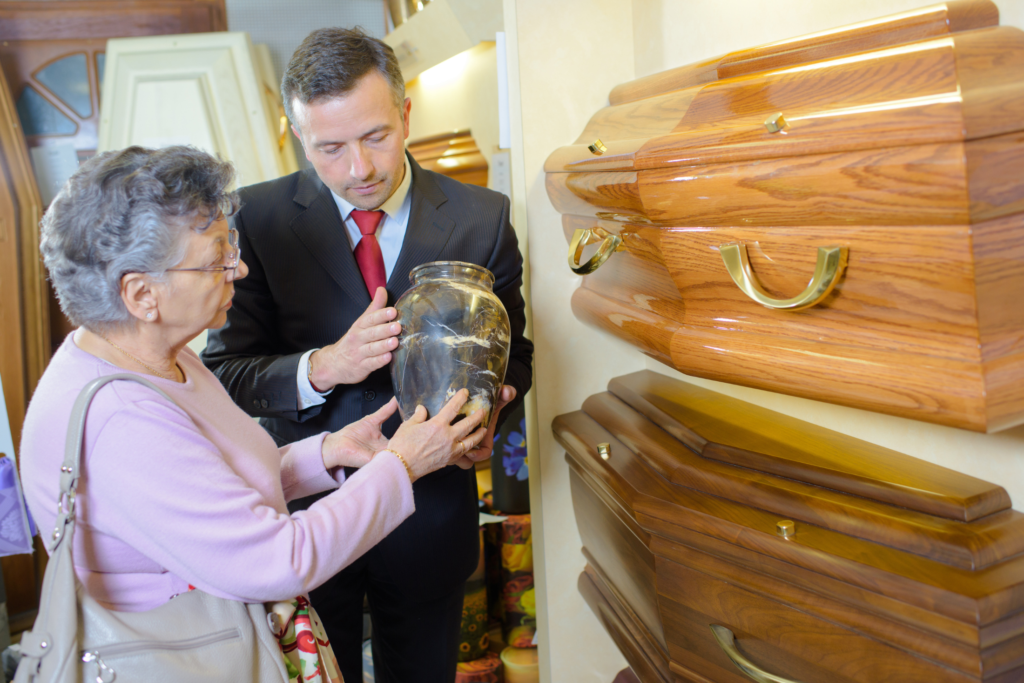
When a loved one passes, the first decision many families face is also the one they feel least prepared for: should we choose cremation or traditional burial?
For many Northeast Philly families, this decision carries practical, emotional, cultural, and spiritual weight. Some families have known for years what their loved one wanted. Others sit down with a funeral director feeling unsure, tired, and worried about making the wrong choice. Cremation vs. traditional burial is not a question of right or wrong. It is a question of what best honors the person who died, supports the family, and respects the beliefs, budget, and timing involved.
At John F. Fluehr & Sons, families are guided through both options with patience and no pressure. Both cremation and traditional burial can include a meaningful ceremony, family gathering, prayers, readings, music, flowers, memories, and time to say goodbye.
Cremation vs. Traditional Burial: The Main Difference
The main difference is what happens to the body after death. With traditional burial, the body is placed in a casket and buried in a cemetery, often after a visitation, funeral service, religious service, or graveside committal.
With cremation, the body is reduced to cremated remains through a regulated process. The family may then choose to keep the urn, bury the urn, place it in a niche, scatter the remains where permitted, or hold a memorial service before or after cremation.
Both options may include a public service. Both options may be quiet and private. Both options may include faith traditions, family customs, and personal touches.
Cremation Gives Families Flexibility
Cremation is often chosen because it gives families more flexibility with timing and service style. A family may hold a funeral or visitation before cremation. They may also choose a memorial service afterward, once relatives have time to travel to Philadelphia.
This flexibility matters in Northeast Philadelphia, where many families have relatives across Pennsylvania, New Jersey, Florida, the Carolinas, and beyond. Cremation may give the family time to plan a gathering that works for everyone instead of rushing to meet a tight schedule.
At Fluehr, we explain how cremation may be paired with a traditional service, a private gathering, or a later memorial through its cremation services that include private or public memorial options.
A helpful national guide from US Funerals Online also outlines cremation steps, authorization needs, service choices, costs, final resting options, and cultural considerations in its overview of cremation planning and memorial choices.
Traditional Burial Gives Families a Familiar Path
Traditional burial remains meaningful for many families because it follows a familiar order. There is often a viewing or visitation, followed by a funeral service, Mass, chapel service, or religious ceremony. Afterward, the family proceeds to the cemetery for a graveside committal.
For families with Catholic, Orthodox, Protestant, Jewish, Muslim, or other religious traditions, burial may carry deep spiritual meaning. For others, the comfort comes from having a permanent gravesite where family members visit, place flowers, pray, and remember.
John F. Fluehr & Sons supports families through traditional funeral services with visitation, ceremony, and graveside committal, including coordination with clergy, cemeteries, transportation, obituary details, and service timing.
Cost Differences Families Should Understand
Cost often becomes part of the conversation. That does not mean a family cares less. It means the family needs clear information during a difficult time.
Traditional burial often includes funeral home services, a casket, possible embalming, transportation, cemetery charges, opening and closing of the grave, and sometimes a burial vault or grave liner required by the cemetery. Cremation may involve fewer cemetery and merchandise costs, depending on whether the family chooses a full service, a memorial service, urn burial, niche placement, or another option.
The Funeral Consumers Alliance explains several traditional burial decisions, including caskets, cemetery plots, burial containers, cemetery charges, and lower cost alternatives in its consumer guide to traditional burial choices.
The best step is to ask for a clear explanation of options. A funeral director should help you understand what is required, what is optional, and how each choice affects the final cost.
Timing May Shape the Decision
Timing often affects cremation vs. traditional burial decisions. Traditional burial usually follows a shorter planning window, especially when a public viewing, funeral service, and cemetery committal are involved. The family often needs to choose a date, confirm cemetery availability, coordinate clergy, gather clothing, prepare obituary details, and notify relatives.
Cremation may give families more time. A memorial service may happen days, weeks, or even months later. This helps when relatives live out of state, when the family needs more time to plan, or when a later gathering feels more appropriate.
Still, cremation also requires proper authorization and paperwork. Families should not assume it is instant. A funeral director helps explain the steps and expected timeline.
Cultural and Religious Considerations Matter
In Northeast Philadelphia, funeral decisions often reflect family heritage, faith, and community tradition. Irish Catholic, Italian Catholic, Ukrainian Orthodox, Russian Orthodox, Latino, Chinese, Vietnamese, Jewish, Muslim, Hindu, Buddhist, and non religious families may approach cremation and burial differently.
Some traditions prefer burial. Some allow cremation with certain prayers or timing. Some families blend religious customs with personal wishes. Others focus on what the loved one wanted most.
The right funeral home should ask thoughtful questions before making recommendations:
- Did your loved one share any wishes?
- Does your faith tradition guide this decision?
- Is a viewing important to the family?
- Do relatives need to travel?
- Is there an existing cemetery plot?
- Would a later memorial give the family more comfort?
These questions help the family slow down and choose with care.
Both Choices Can Include a Meaningful Ceremony
One common misunderstanding is that cremation means no service. That is not true. Cremation may include a visitation, funeral, religious service, memorial service, graveside urn burial, or celebration of life.
Another misunderstanding is that traditional burial must feel formal or impersonal. That is also not true. A traditional funeral may include personal music, family photos, favorite readings, memory tables, military honors, cultural customs, and stories that reflect the life lived.
Families should not think in terms of “simple vs. meaningful.” A simple service may be meaningful. A formal service may feel deeply personal. What matters is whether the service gives family and friends space to gather, remember, and support one another.
Questions to Ask Before You Decide
If your family is comparing cremation and traditional burial, bring your questions to the funeral director. You do not need to have every answer ready.
Helpful questions include:
- What did our loved one want?
- Does our family have religious or cultural guidance to follow?
- Do we want a viewing or visitation?
- Do we want a service soon, or would a later memorial feel better?
- Is there an existing cemetery plot?
- Are relatives traveling from outside Philadelphia?
- What costs should we expect with each option?
- What choices are required, and what choices are optional?
- How much time do we have to decide?
These questions help turn an emotional decision into a clear conversation.
How Fluehr Guides Families Through the Choice
John F. Fluehr & Sons has served Northeast Philadelphia families since 1898. The team understands that funeral planning is not only about logistics. It is about faith, family history, neighborhood ties, budget, travel, and grief.
Some families arrive certain that they want burial. Others feel sure about cremation. Many are undecided. The role of a funeral director is to explain, not pressure. Families deserve time, clarity, and respect.
Fluehr helps families compare service options, understand timing, discuss cultural or religious needs, coordinate with clergy or cemeteries, prepare obituary details, and create a farewell that feels right for the person being honored.
A Thoughtful Decision, Not a Rushed One
Cremation vs. traditional burial is one of the first decisions many families face after a death, but it does not have to be made alone. The most helpful place to begin is with the person’s wishes, the family’s beliefs, the need for ceremony, the timeline, and the budget.
Both paths can honor a life with dignity. Both paths can bring family together. Both paths can include prayer, memory, music, stories, and love.
If your family is weighing cremation and traditional burial, the team at John F. Fluehr & Sons is here to help you understand each option with care, respect, and no pressure. Call John F. Fluehr & Sons at (215) 624-5150.