
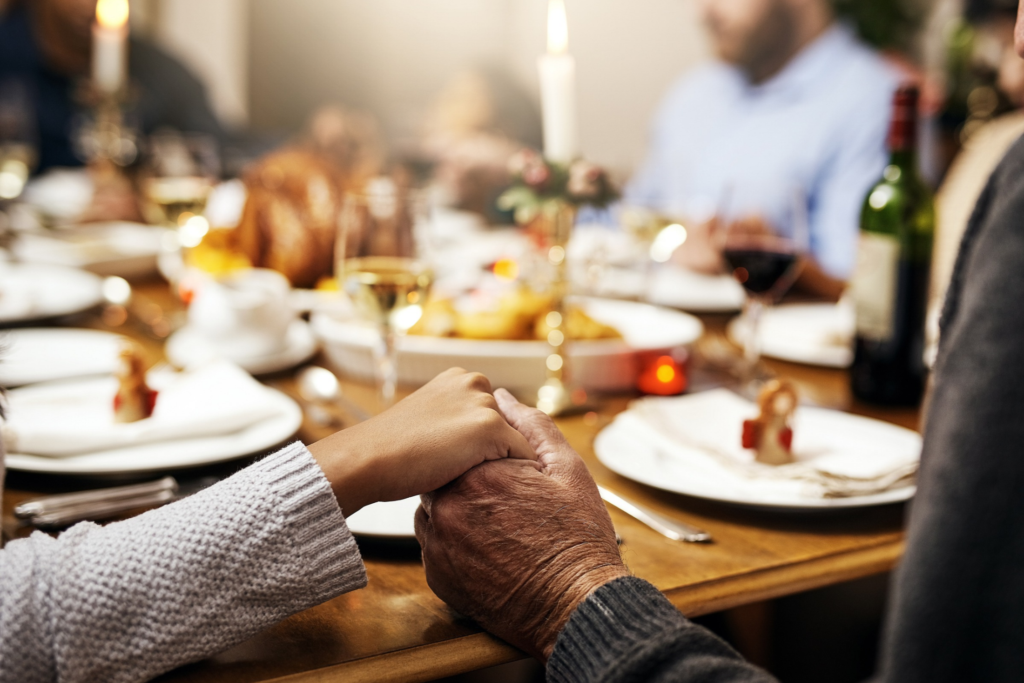
The first Thanksgiving after someone dies can make an ordinary family tradition feel unfamiliar.
The same house is there. The same recipes come out. Someone still remembers which football game needs to be on. The dining room table may look almost exactly as it did last year.
One person is missing.
That absence can change the entire day.
Maybe Dad always carved the turkey. Maybe Mom made the stuffing nobody else has ever gotten quite right. Maybe Grandmom sat in the same chair every year. Maybe your brother arrived late and loud. Maybe your spouse was the person who kept everyone talking after dinner while you cleaned the kitchen together.
The first major holiday after a death often creates pressure from two directions. Part of you wants everything to stay exactly the same because changing traditions feels like losing one more piece of the person. Another part wants Thanksgiving to look completely different because every familiar detail hurts.
You do not have to choose between preserving everything and changing everything.
Sometimes changing one thing is enough.
The First Thanksgiving Does Not Need to Look Like the Last One
Families often approach the first holiday after a death with an unspoken goal: get through it normally.
Normal may not be available this year.
The guest list has changed. Family roles have changed. Emotions have changed. Even small tasks can bring unexpected reminders.
The person who always brought dessert is not coming.
The place where they usually parked is empty.
Someone reaches for their favorite serving bowl without thinking.
A relative starts telling a story and suddenly everyone realizes who should have been there to finish it.
Trying to recreate the previous Thanksgiving perfectly can turn the day into a test nobody needs to pass.
The holiday is allowed to be different.
Change One Thing Instead of Everything
When familiar traditions feel painful, families sometimes respond by canceling the entire holiday or rebuilding every part of it.
Neither choice is automatically wrong.
There is also a middle ground.
Change one thing.
Eat at a different time.
Let somebody else host.
Order dessert instead of making it.
Move dinner from the dining room to the kitchen.
Skip one tradition that feels especially hard.
Add one new tradition that remembers the person who died.
The What’s Your Grief guide to coping with grief during the holidays encourages grieving families to make deliberate choices about which traditions they want to keep, which ones they want to change, and whether a new tradition would feel meaningful.
You do not need to redesign Thanksgiving forever.
You are deciding what works this year.
Say Their Name Out Loud
One of the strangest experiences after a death is watching everyone think about the same person while nobody says the name.
People sometimes avoid mentioning someone who died because they do not want to upset the family.
The family already knows who is missing.
Saying the name does not introduce grief into the room. Grief arrived before dinner.
What saying the name can do is remove the pressure to pretend.
“Dad would have complained about how early we ate.”
“Mom would have loved this pie.”
“This was Grandpop’s favorite part of Thanksgiving.”
Those sentences allow the person to remain part of the family story.
You may laugh.
You may cry.
You might do both within the same minute.
That is fine.
Decide What to Do With Their Place at the Table
The empty chair can become the hardest object in the room.
Families handle it differently.
Some leave the chair empty intentionally.
Some set a place there.
Some place a photograph, flower, candle, or small keepsake nearby.
Some rearrange the table completely because looking at the empty chair would make the meal too difficult.
There is no correct choice.
If setting a place feels comforting, do it.
If it feels unbearable, do not.
A memorial gesture should help the people who are grieving. It should not become another obligation.
Permission for the First Thanksgiving
You may change the plan.
You may say their name.
You may cry at dinner.
You may laugh without feeling guilty.
You may leave early.
You may skip something you have done every Thanksgiving for twenty years.
You may decide next year will be different again.
It Is Fine to Leave Early
This deserves to be said plainly.
You do not have to stay until everyone else leaves.
If dinner ends and you realize you have reached your limit, go home.
If the room becomes too loud, take a walk.
If you arrive for dessert and decide fifteen minutes later that you cannot do it, leave.
Grief drains energy in ways people around you may not see.
Driving yourself to the gathering gives you control over when you leave. If you are riding with someone else, talk beforehand about the possibility that you may need to go early.
You do not need an elaborate excuse.
“I am glad I came. I am tired and I am going to head home.”
That is enough.
You Are Allowed to Skip Thanksgiving
Some people need permission for an even bigger decision.
You do not have to celebrate Thanksgiving this year.
You can stay home.
You can travel.
You can eat something completely unrelated to Thanksgiving.
You can spend a quiet day with one other person.
You can watch movies and let Thursday pass.
If participating feels unbearable, taking a year away from the usual celebration does not mean you have abandoned your family or permanently ended a tradition.
The holiday will come again.
This year only needs to work for this year.
Expect Different People to Grieve Differently
One family member wants to talk about the person all day.
Another does not want the name mentioned during dinner.
Someone wants to keep every tradition.
Someone else wants Thanksgiving at a restaurant because walking into the family dining room feels impossible.
Neither response proves who loved the person more.
Grief rarely creates a united family plan automatically.
Talk before Thanksgiving if you can.
Ask what feels important.
Ask what people are worried about.
Tell family members what you think you will need.
The goal is not to make everyone grieve the same way.
It is to give different forms of grief enough room to exist together.
Do Not Force Gratitude
Thanksgiving comes with an obvious expectation to feel thankful.
That can be difficult during grief.
You may be grateful for your children and still angry your spouse died.
You may be grateful for decades with your mother and still wish she were sitting beside you.
You may appreciate everyone who showed up and still want to be alone.
Gratitude and grief are not opposites.
You do not need to replace sadness with thankfulness before you are allowed to participate in the holiday.
Let Someone Else Make the Turkey
Holiday grief is emotional, but it is also practical.
The person who died may have had jobs nobody realized were jobs until they stopped being done.
Who bought the turkey?
Who made the gravy?
Who called everybody with the dinner time?
Who brought extra chairs from the basement?
Who picked up Grandmom?
Who kept the children occupied while everyone cooked?
Do not automatically hand every responsibility to the person closest to the loss.
Share the work.
Buy part of the meal.
Accept help.
Let Thanksgiving be easier than usual.
There is no prize for producing the perfect holiday while grieving.
Make One Dish They Loved
Food carries memory quickly.
A recipe may remind you of someone before you have even tasted it.
If your family wants a simple way to include the person who died, make one thing associated with them.
Grandmom’s stuffing.
Dad’s sweet potatoes.
Your brother’s favorite pie.
The canned cranberry sauce your spouse insisted was better than anything homemade.
You do not have to turn the entire meal into a memorial.
One dish can be enough.
If nobody knows the recipe, that can become part of the story too.
“We tried making Mom’s stuffing, and it is nowhere close.”
Sometimes even a failed recipe creates a memory worth keeping.
Children Need Permission to Have Fun
Adults sometimes become uncomfortable when children laugh or play during the first holiday after a death.
Children move in and out of grief differently.
A child may cry about Grandpop in the morning and spend the afternoon completely absorbed in football, cousins, or dessert.
That does not mean the loss mattered less.
Tell children directly that they are allowed to enjoy Thanksgiving.
They are also allowed to miss the person who died.
Both can happen.
John F. Fluehr & Sons offers guidance for supporting children and teens through grief, including honest communication, stable routines, opportunities for expression, and ways to remember someone who died.
If You Are Supporting Someone Else, Do Not Try to Fix Thanksgiving
Maybe you are not the person grieving most directly.
Maybe your sister lost her husband.
Your friend lost her mother.
Your neighbor will be spending the first Thanksgiving without his wife.
You do not need to create a perfect holiday for them.
HelpGuide’s guidance for helping someone who is grieving emphasizes listening, acknowledging the loss, offering practical help, and avoiding pressure about how someone should feel.
Ask something specific.
“Would you like to come for dinner, or would you rather stay home?”
“Do you want me to save you a plate?”
“Would it help if I picked you up?”
“Do you want to talk about your dad today, or would you rather not?”
Then respect the answer.
Do Not Treat a Changed Plan as a Family Rejection
This can be difficult for relatives who are grieving too.
Your sister does not want to come.
Your father wants to leave after dinner.
Your mother refuses to make the pie she has made every year.
Try not to interpret every changed plan as a statement about the family.
Sometimes grief simply changes capacity.
People who love one another may need different things on the same day.
Have an Exit Plan Before You Need One
One practical step can make attending easier.
Know how you will leave.
Drive yourself when possible.
If you are staying with relatives, identify somewhere quiet you can go for twenty minutes.
Tell one trusted person ahead of time:
“I may need to step out. Please do not make a big deal about it.”
Having permission to leave sometimes makes staying easier.
The Quiet After Everyone Leaves Can Be Hard Too
People focus on getting through Thanksgiving dinner.
The harder moment may come afterward.
The dishes are done.
The family leaves.
The football game ends.
The house becomes quiet again.
Plan gently for that part of the day too.
Maybe someone stays over.
Maybe you call a friend.
Maybe you take a walk.
Maybe you go to bed early.
Maybe you want the quiet.
Knowing the emotional drop may come afterward can keep it from feeling like something has gone wrong.
Thanksgiving Does Not Measure How Well You Are Grieving
If you cry through dinner, you have not failed.
If you laugh all afternoon, you have not forgotten anyone.
If you stay home, you are not avoiding grief incorrectly.
If you host twenty people and cook every family recipe, that does not mean you are “doing better” than someone who cannot walk into the dining room.
There is no score.
John F. Fluehr & Sons’ resource for supporting yourself and others through grief reminds families that grief continues beyond the funeral and often resurfaces around holidays, birthdays, and anniversaries.
Thanksgiving is one day inside a much longer adjustment.
Say Their Name Before the Day Ends
If you want one suggestion for the first Thanksgiving, keep it simple.
Say their name.
Tell one story.
Make one dish.
Raise a glass.
Put out a photograph.
Light a candle.
Or sit quietly for a minute and remember.
There is no requirement to turn Thanksgiving into a memorial service.
You are simply making room for the truth everyone already knows.
Someone important is missing.
They are still part of the family.
Next Thanksgiving Does Not Have to Look Like This One
The first Thanksgiving often feels permanent while you are living through it.
It is not.
Next year, you might want the old traditions back.
You might keep the new one you started this year.
You might host again.
You might decide somebody else should host forever.
You may still feel grief intensely. You may notice parts of the day have become easier.
You do not need to decide any of that now.
This November, the task is smaller.
Get through this Thanksgiving in the way that asks the least unnecessary pain from you.
Change one thing instead of everything.
Say their name when you want to say it.
Accept the help.
Laugh when something is funny.
Cry when something hurts.
And if you have had enough, it is fine to leave early.