Halloween has a way of bringing questions about death into the house without anyone planning the conversation.
A child sees a skeleton hanging from a porch and asks what bones look like after someone dies. A cartoon ghost leads to a question about Grandpop. A cemetery beside the road suddenly seems more interesting because October decorations have filled the neighborhood with tombstones, monsters, and pretend graves.
For parents, the instinct is often to change the subject.
Death feels too serious for Halloween. Cemeteries feel too sad. Adults worry that explaining too much will frighten a child.
Yet children are already thinking about what they see.
Halloween can become a useful opening to separate pretend scary images from what death, funerals, cemeteries, and remembrance actually mean. The goal is not to convince children that loss never hurts or that death can never feel frightening. The goal is to give them honest information so imagination does not have to fill in the blanks.
Halloween Death and Real Death Are Two Different Things
Halloween turns death into entertainment.
Skeletons dance. Ghosts chase people. Zombies walk around the neighborhood. Plastic gravestones appear on lawns. Someone jumps out from behind a bush, everybody screams, and five minutes later they are eating candy.
Children, especially younger children, do not always separate those images from real death as neatly as adults do.
A child might wonder whether people buried in cemeteries become skeletons that come out at night. They might think a grandparent who died became a ghost. They might associate a cemetery with horror movies rather than with families visiting people they love.
Parents do not need a complicated explanation.
You can say:
“Halloween uses pretend pictures of death to be spooky and fun. Real cemeteries are quiet places where families bury or remember people who died.”
Or:
“That skeleton is a decoration. Everyone has bones inside their body. It is not going to come alive.”
Clear explanations give children something solid to hold onto.
Use the Word Died
Adults often soften death with phrases like “passed away,” “went to sleep,” “we lost him,” or “she went away.”
Adults understand those expressions.
Young children often hear them literally.
If Grandmom “went to sleep and did not wake up,” bedtime might suddenly feel dangerous. If the family “lost” Grandpop, a child might wonder whether someone can find him. If someone “went away,” the child might wait for that person to return.
Direct language sounds harder to adults, but it is often easier for children to understand.
Try:
“Grandpop died. His body stopped working, so he cannot breathe, eat, talk, or feel pain anymore.”
Then stop and see what the child asks next.
You do not need to give a biology lesson unless they want one.
Let Halloween Questions Lead the Conversation
Children are often better at starting these conversations than adults.
You walk past a decorated house and hear:
“What happens when somebody dies?”
Answer the question they asked.
“When someone dies, their body stops working completely. They do not feel pain anymore, and they cannot come back to life.”
Then wait.
The next question might be philosophical.
“Where do they go?”
Your answer can reflect your family’s faith or beliefs.
The next question might be practical.
“What happens to their body?”
You can explain burial or cremation simply.
The next question might be personal.
“Are you going to die?”
A calm answer might be:
“Everyone dies someday, but most people live for a long time. I expect to be here taking care of you for a long time.”
Avoid promises no adult can guarantee, such as “I will never die.” Reassurance works best when it is honest.
Children Usually Need Smaller Answers Than Adults Expect
Parents sometimes avoid the subject because they picture a long, emotional conversation.
A five year old might need thirty seconds.
They ask a question. You answer it. They say “okay” and run back to their Halloween candy.
That does not mean the answer did not matter.
Children often process death a little at a time. The same question might return next week or next month. Repetition is part of understanding.
Dougy Center offers grief resources for children, teens, parents, and caregivers organized around different ages and grief experiences. Resources like these are useful reminders that children do not all understand or express loss in the same way.
Are Cemeteries Scary?
Halloween movies have done cemeteries no favors.
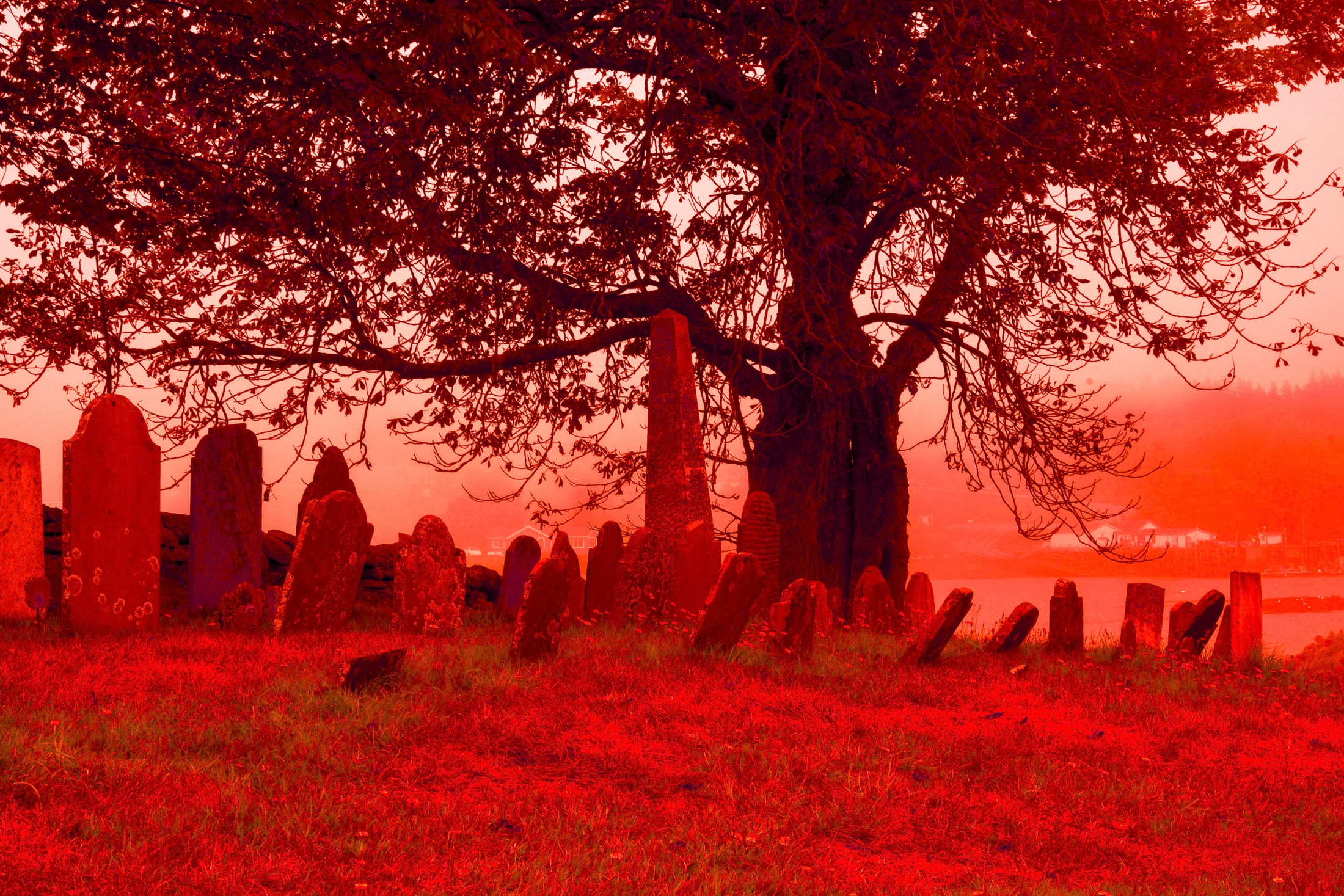
They are usually shown at night, covered in fog, with crooked stones and something waiting behind a tree.
Real cemeteries serve a much simpler purpose.
They are places where people are buried, where cremated remains may be placed, and where families go to remember people who died.
If your child asks whether a cemetery is scary, you might say:
“It might feel unfamiliar the first time, but cemeteries are not designed to scare people. They are places where families remember people they love.”
Some children will find cemeteries interesting. They notice names, dates, flowers, flags, statues, trees, and different kinds of stones.
Others will feel nervous.
Both reactions are fine.
Visiting a Grave With a Child for the First Time
A first cemetery visit goes better when the child knows what to expect.
Tell them where you are going and why.
“We are going to visit Grandmom’s grave. The cemetery is where her body was buried after she died. We are going because we love her and want to remember her.”
Explain what they will see.
There will be many grave markers. Other families might be visiting. Some people might be crying. Some graves will have flowers, flags, stones, photographs, or other memorial items.
Then explain what your family plans to do.
Maybe you will bring flowers.
Maybe you will say a prayer.
Maybe you will clean leaves away from the marker.
Maybe you will tell a story.
Maybe you will stand quietly for a few minutes and leave.
Knowing the sequence lowers uncertainty.
Give Children a Choice About Participating
A child does not need to grieve exactly like an adult.
They might want to place a flower on the grave. They might want to draw a picture beforehand. They might want to say something out loud.
They might also want to stand a few feet away.
Give them choices where possible.
Remembering A Life explains in its guidance on children, youth, and funeral participation that children benefit from being given the opportunity to take part in memorial experiences in ways that feel meaningful to them. Preparing children beforehand is an important part of making those experiences less frightening.
The same principle applies to visiting a grave.
Invite participation. Do not force a performance.
Explain What Is Under the Grave Marker
Children often ask the question adults hope they will skip.
“Is Grandpop under there?”
Answer plainly.
If he was buried there, say yes.
“Grandpop’s body is buried in the ground here. The stone has his name on it so people know where he is buried and can come remember him.”
If cremated remains are buried or placed in a niche, explain that instead.
Children usually handle direct information better than adults expect when the information is delivered calmly.
What often frightens children is sensing that adults are avoiding something too scary to name.
What If a Child Asks About the Body?
Some children are curious about what happens physically after burial.
You do not need graphic detail.
A basic answer is enough:
“After someone dies, their body does not work anymore. Over a long time, bodies naturally change after burial.”
If they want more information, answer according to their age and your comfort level.
If they do not ask another question, stop there.
Curiosity about bodies is not disrespectful. Children are trying to understand something adults already know.
Let the Cemetery Become a Place for Stories
A grave visit does not need to center only on sadness.
Tell a story while you are there.
“Grandmom loved Halloween because she always bought too much candy.”
“Pop used to bring me to this same cemetery to visit his parents.”
“Your uncle was the funniest person at every family party.”
Storytelling helps children understand why the family returns.
The cemetery is not only where someone was buried. It is one of the places where the family continues remembering them.
Children Might Play or Laugh at the Cemetery
This sometimes makes adults uncomfortable.
A child asks a serious question and then starts kicking leaves. Two cousins giggle. A toddler wants to run across the grass.
Children move in and out of grief quickly.
They do not necessarily stay in a solemn emotional state for as long as adults do.
Teach basic cemetery respect. Do not climb on markers. Do not disturb another family’s flowers or memorial objects. Follow cemetery rules.
But do not assume every smile or laugh means the child does not understand the importance of the visit.
What If the Child Refuses to Go?
Find out why before turning the answer into a battle.
“What worries you about going?”
The child might believe there will be ghosts. They might think they will see a body. They might remember adults crying at the funeral and worry the same thing will happen again.
Correct misunderstandings first.
If the child still feels strongly uncomfortable, another form of remembrance might work better for now.
Look at photographs. Make a favorite meal. Draw a picture. Tell a story. Visit another time.
A cemetery is one place to remember someone. It is not the only place.
Halloween Is a Good Time to Talk About Remembering
Halloween does not need to become a grief lesson every time someone puts up a skeleton.
Let children enjoy the holiday.
Wear costumes. Carve pumpkins. Walk the neighborhood. Eat candy.
But when questions come, take them seriously.
Halloween offers an unusual opportunity because death is already part of the imagery around children. Parents can explain the difference between spooky make believe and real loss without creating the subject from nowhere.
You might say:
“Halloween makes graves and skeletons look scary for fun. Real death is different. When someone we love dies, we can feel sad and miss them, and we remember them in ways that help us stay connected.”
What If Halloween Brings Up a Recent Death?
A child grieving someone close might react differently to Halloween than in previous years.
A ghost decoration might suddenly feel upsetting. A fake coffin might remind them of a funeral. A classmate might make a joke about death without realizing how personal the subject has become.
Watch for changes without assuming every reaction means something is wrong.
Ask:
“Does any of this Halloween stuff bother you this year?”
Give them permission to skip an attraction, haunted house, movie, or decoration that feels uncomfortable.
John F. Fluehr & Sons provides guidance for supporting children and teens through grief, with an emphasis on honest language, routine, opportunities for expression, remembrance, and support suited to the individual child.
Parents Do Not Need Every Answer
Children eventually ask questions adults cannot answer with certainty.
“What happens after we die?”
“Will I see Grandmom again?”
“Why did God let him die?”
Families answer these questions differently depending on faith and belief.
It is also acceptable to say:
“I do not know for sure.”
You can follow with what your family believes:
“What we believe is…”
Honest uncertainty is better than inventing an answer because silence feels uncomfortable.
Do Not Make Death Frightening by Making It Forbidden
Children notice when adults refuse to discuss something.
If every question about death gets redirected, whispered about, or answered with “you are too young to understand,” a child learns that death must be too frightening to talk about.
Open conversation teaches the opposite.
Death is sad.
Loss hurts.
People miss those who die.
Families also remember, visit, tell stories, pray, look at photographs, laugh about old memories, and continue living.
That is a more complete picture than Halloween gives them.
Use Trusted Resources When Questions Get Bigger
One conversation will not answer every question a child has about death.
As children grow, their understanding changes. A child who visited a grandparent’s grave at six might ask very different questions at ten or fourteen.
Families looking for help with those conversations can use John F. Fluehr & Sons’ family planning and grief resource center for information about children, grief, planning, funeral arrangements, and other questions that often come up before and after a death.
Resources help. So does knowing when more individual support is needed from a counselor, pediatrician, clergy member, school professional, or grief specialist.
A Cemetery Does Not Have to Be a Scary Place
For a child, the meaning of a cemetery often comes from the adults who introduce it.
If adults whisper, rush, and treat the place as frightening, the child notices.
If adults explain what the cemetery is, answer questions honestly, respect the space, and tell stories about the people buried there, the child receives a different message.
A cemetery is a place connected with death.
It is also a place connected with love, family history, memory, faith, and the people who came before us.
Halloween turns graves into decorations for a few weeks every October.
Real graves tell a different story.
They have names.
They have dates.
They belong to people whose families still remember them.
Teaching children that difference does not make death cheerful or easy. It makes death understandable enough to talk about.
And when children know they are allowed to ask, the subject becomes a little less frightening.
The team at John F. Fluehr & Sons is here for your whole family and includes its youngest members. Call us at (215) 624-5150.