Some businesses begin with a market gap. Others begin with a family name. John F. Fluehr & Sons began with a calling.
In 1898, John F. Fluehr Sr. chose a path that set him apart from the trade many around him knew. While other members of his family worked in furniture, he enrolled in the New York College of Embalming and entered a profession that demanded skill, discipline, and strength of heart. He returned to Philadelphia and founded what would grow into one of the city’s best known funeral homes, rooted first in Kensington and later carried forward in Mayfair and the Northeast.
From the start, this story has been about more than buildings, dates, and family succession. It has been about service. It has been about showing up for families when words fail, when grief feels heavy, and when details matter most. Over time, the name John F. Fluehr & Sons came to stand for consistency, dignity, and local trust earned slowly, family by family, generation by generation.
Today, the firm enters a new chapter under Rich McFillin, who became owner in 2025 with a clear goal: honor what came before, protect the name families know, and carry the work forward with care. To understand why that matters, it helps to look back at where the story began.
A Beginning in Kensington, 1898
When John F. Fluehr Sr. founded the business in Kensington in 1898, Philadelphia was a city of neighborhoods, trades, churches, and close family ties. Kensington stood close to the industrial life of the city, a place where work shaped daily rhythm and local institutions shaped community identity. Funeral service in that setting was never a distant transaction. It was personal. It happened among neighbors who knew one another, often across generations.
John Sr. entered that world with formal training and a serious view of the work. The title used at the time was “undertaker,” yet the role already called for far more than logistics. Families needed guidance, composure, and care in moments that felt uncertain. That early decision to study embalming rather than step into the furniture trade says a great deal about the founder’s character. He did not drift into funeral service. He chose it.
That choice placed the firm within a profession built on community responsibility. The work has long asked funeral directors to guide families with care and steady presence, a tradition reflected in the history of funeral service in America and in the kind of place John F. Fluehr & Sons became through its years of service in Philadelphia.
From Founder to Family Firm
John Sr. did not build the business as a short term venture. He built it as family work. His sons, John Jr. and Theodore, joined the funeral home at an early age and learned the profession close to the ground, through real service, long hours, and close observation of their father’s example. In family businesses, values move forward through daily habits, shared standards, and a clear sense of duty.
By 1929, the business took on the name that would carry through the next century: John F. Fluehr & Sons. The partnership made public what had already become true in practice. This was now a father and sons enterprise, built on shared labor and shared responsibility. The name itself sent a message. It told Philadelphia families that the firm’s identity rested on continuity. One generation was preparing the next, and families who turned to Fluehr in one season of life would find the same name, the same values, and the same care in the next.
That continuity mattered in funeral service because trust grows over time. Families remember how they were treated. They remember who answered the phone, who explained the steps, who respected their traditions, and who made a hard day feel manageable. Long before brand language became common, John F. Fluehr & Sons was building a brand through lived reputation.
Mayfair, Cottman Avenue, and a Growing Philadelphia
In 1930, John Jr. married and opened a funeral home in Mayfair, then part of a developing section of Northeast Philadelphia. That move showed foresight. The firm was not leaving its roots behind. It was extending them into the path of the city’s growth. Northeast Philadelphia would become a major center of family life in the decades that followed, and the funeral home’s presence there placed it close to the households it would serve for years to come.
Philadelphia’s Northeast changed over time from a more rural edge of the city into a broad residential region shaped by industrial growth, new housing, and expanding neighborhood life. That larger movement helps explain why the Fluehr story belongs not only to one family, but to the civic story of Philadelphia itself. You can see that wider context in the growth of Northeast Philadelphia.
Then came a defining year. In 1933, John F. Fluehr Sr. died at age fifty five. With his passing, the burden of continuity fell directly onto the next generation. Theodore continued operating the Kensington funeral home. John Jr. continued at the Mayfair location. Loss tested the family, yet it also revealed the strength of the foundation John Sr. had laid. The business did not lose direction. The work continued.
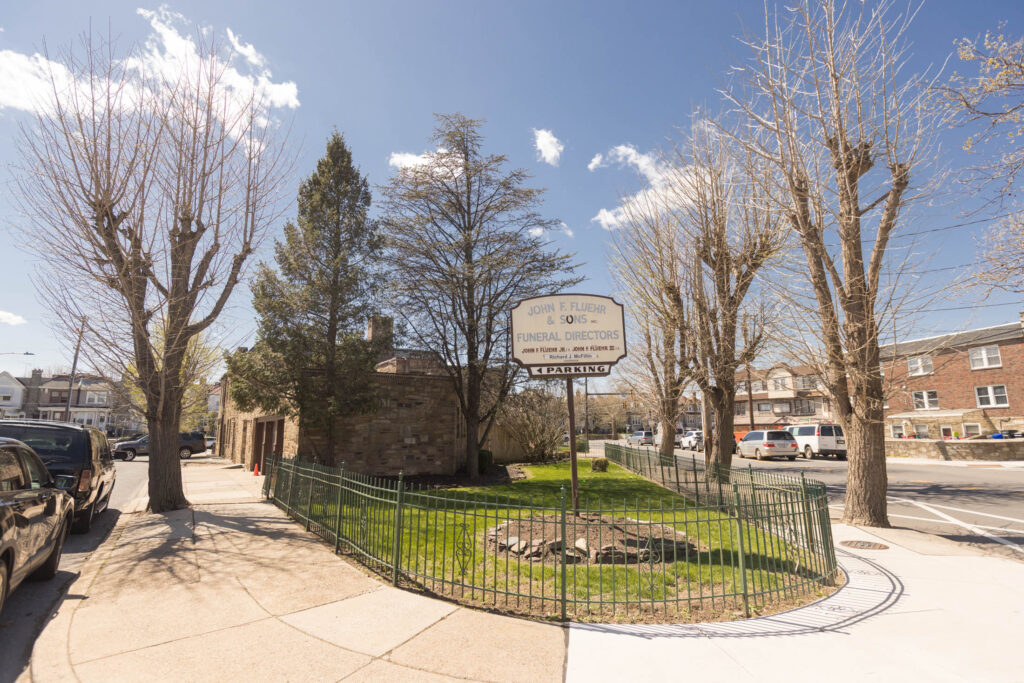
In 1937, John Jr. built a new funeral home at 3301 Cottman Avenue, the address that still anchors the firm today. That step was practical, yet it also carried symbolic weight. A permanent home on Cottman Avenue marked the business as established, durable, and ready for the future. It signaled confidence in the growing Northeast and confidence in the family’s ability to serve a rising number of households with the same care that shaped the original business in Kensington.
A Name Carried by New Generations
Family businesses often face a hard question after the founder is gone: was the early success tied to one person, or did the founder create a culture strong enough to outlast him? In the case of John F. Fluehr & Sons, the answer came through the generations that followed.
John Jr. had four sons, and three joined the business: John F. III, Theodore R., and Richard J. Fluehr. Their presence turned succession into structure. The funeral home was no longer a first generation story held together by memory alone. It had become a multigenerational institution with a visible future. Families who walked through the doors saw a name that had not stood still. It had grown with them.
In 1988, day to day operations passed to those sons while John Jr. remained active in the business. That shift reflected a strong trait in long standing family firms: they prepare for transition before crisis forces it. Leadership changed hands, yet the identity of the funeral home held firm. When John Jr. died in 1992 at age eighty seven, and when John F. Fluehr III died in 1994, the business had already shown an ability to carry forward under pressure.
The losses did not erase the name. They deepened its meaning. Each generation left labor, memory, and local trust behind. By the time Richard J. Fluehr died in 2022, the Fluehr name had become part of Philadelphia’s funeral service history across more than a century of care.
More Than a Business Name
It is easy to talk about heritage in broad terms. It is harder to define what heritage means in daily practice. At John F. Fluehr & Sons, heritage has never rested only in longevity. Plenty of businesses last a long time. Heritage means something more specific here. It means a family name attached to a high standard of personal care. It means a funeral home that stayed woven into the lives of local families. It means a place where history did not sit on a shelf. History shaped the way service was delivered every day.
That legacy still lives in the way the firm presents itself to families now. The public face of the business still centers compassion, clarity, and meaningful support through each step of the process, values reflected across the funeral home’s history and values and carried into the present day experience families receive.
For families, that matters. In funeral service, a respected name does real work. It lowers uncertainty. It gives people a starting point when they do not know where to begin. It tells them that others have trusted this place before, often many times, and found compassion there.
Rich McFillin and the 2025 Transition
In 2025, Rich McFillin purchased John F. Fluehr & Sons from the wife of the founder’s grandson. On paper, that marked a change in ownership. In spirit, the goal was continuity. The owner biography on the funeral home’s site frames Rich’s path in terms of family, faith, tradition, and respect for the sacred trust of funeral service. Those themes align closely with the values that shaped the firm from the start.
Rich’s own story helps explain why this transition feels fitting. He also comes from a large family. He also entered funeral service with seriousness and purpose. His professional background includes work in a crematory, study at La Salle University, and a Mortuary Science degree from Mercer County Community College. He later expanded his service work through MJ Lavish Limos, bringing the same level of care to transportation that he believed memorial service deserved. All of that points to someone who sees funeral service not as a transaction, but as a calling carried out through many details.
That outlook sits well beside the long tradition of the firm’s care for Philadelphia families. It also connects naturally to the funeral home’s present work in serving households through funeral and cremation services in Philadelphia with attention to dignity, clarity, and personal preference. The names on the door and the faces in the rooms have changed across the decades, yet the core duty has stayed the same.
Why Preserving the Fluehr Name Matters
A funeral home name is not like a product label. It carries memory. Families tie it to the hardest days of their lives, and also to the care that helped them through those days. When a name has served a city for more than a century, preserving it becomes an act of stewardship.
That is what makes Rich McFillin’s 2025 acquisition meaningful. He did not step into an empty brand. He stepped into a living inheritance. Keeping the Fluehr name signals respect for the generations who built it and for the Philadelphia families who trusted it. It says that history still holds value, and that continuity still matters in a profession where trust is everything.
If Rich were to say it in the plain, warm terms this story deserves, it might sound like this:
“The Fluehr name means something in Philadelphia. It stands for family, faith, service, and care earned over a long time. When I had the chance to carry this funeral home forward, I felt a responsibility to protect what generations of the Fluehr family built. Keeping the name mattered because families know it, and they trust it. My goal is to honor that trust every day, serve people the right way, and make sure the values behind this name stay strong for the families who walk through our doors now and for the families who will need us in the years ahead.”
That closing thought captures the real heart of the story. John F. Fluehr & Sons is not only a funeral home with a long timeline. It is a Philadelphia institution shaped by vocation, family continuity, neighborhood roots, and steady care. From John Sr.’s choice to study embalming in 1898, to the sons who joined him, to the move into Northeast Philadelphia, to the generations who followed, to Rich McFillin’s decision to preserve the name in 2025, the story has remained grounded in one clear idea: serve families well, and do it with honor.
That is how a local business becomes a legacy. That is how a name lasts. And in Philadelphia, that is how the Fluehr story continues.