
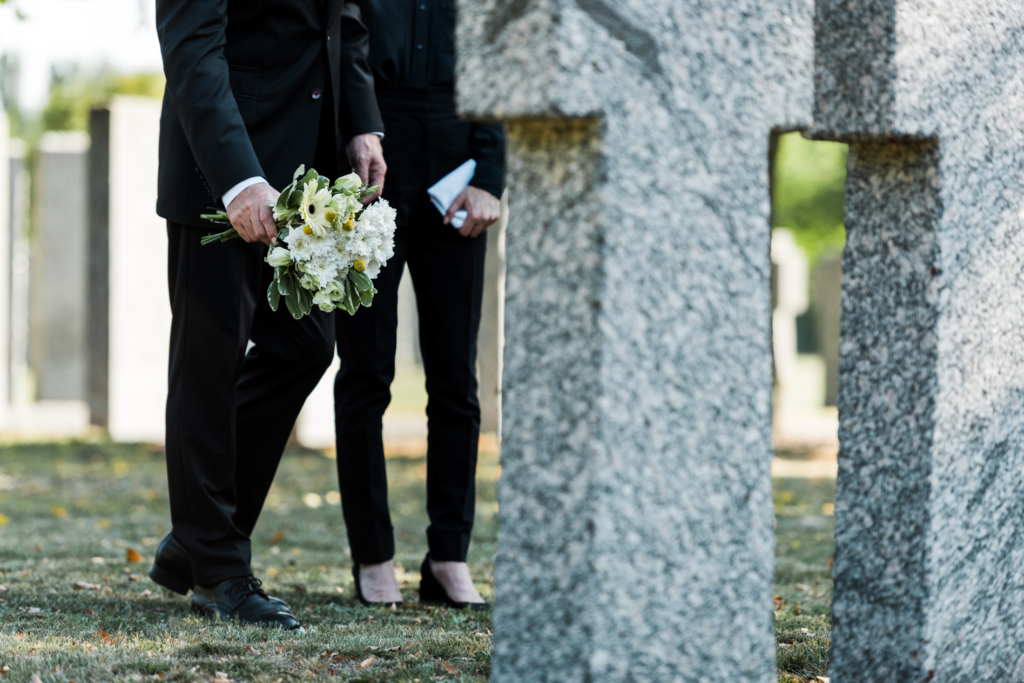
For many families, the word funeral brings a very specific picture to mind. They imagine a visitation, a chapel service, a funeral procession, and then a final gathering at the cemetery. That path still matters deeply to many people. But it is not the only way a meaningful farewell can happen.
A graveside service Philadelphia families choose is often simpler, quieter, and more direct. It takes place at the cemetery itself and focuses the farewell at the place of burial or interment. For some families, that simplicity feels right. It removes extra steps and keeps the moment centered on prayer, memory, and the final act of laying a loved one to rest.
At John F. Fluehr & Sons, families have access to traditional funeral and graveside service support in Philadelphia that respects both time honored customs and simpler forms of remembrance. That matters because many people are unfamiliar with what a graveside service includes, when it makes sense, and how it differs from a more traditional funeral.
This guide explains the basics in plain language. If you are considering a simple funeral service Philadelphia families often choose, or if you are comparing burial options and trying to understand what a cemetery service looks like, this is a good place to begin.
What Is a Graveside Service?
A graveside service is a funeral service held at the cemetery, at the place of burial or interment. Instead of gathering first in a funeral home or church, guests meet at the gravesite, mausoleum crypt, or columbarium niche. The service is usually shorter and more focused than a full traditional funeral.
That shorter format does not make it less meaningful. In many cases, it feels deeply personal because it brings everyone directly to the final place of committal. The family gathers, prayers are offered, words are spoken, and the farewell happens in the place where the loved one will rest.
As this guide to planning a graveside service explains, a graveside service can stand on its own or follow another service. It can be used for traditional burial or for the interment of cremated remains. That flexibility is one reason it continues to be a meaningful option for many Philadelphia families.
How a Graveside Service Differs From a Traditional Funeral
A traditional funeral often includes more than one stage. There may be a viewing or visitation, a service in a funeral home or place of worship, and then a procession to the cemetery. A graveside funeral Philadelphia families choose usually shortens that sequence.
Instead of several locations and events, the main service happens at the cemetery itself. That often means less travel, fewer moving parts, and a more intimate gathering. It may also mean fewer ceremonial elements, depending on the family’s wishes. There may be one speaker instead of several. There may be a brief prayer instead of a longer formal liturgy. There may be no viewing at all, or only a private farewell before the public service.
This does not mean a graveside service lacks reverence or emotional depth. It means the service is concentrated. The focus is on the final act of farewell at the burial place.
The article comparing funeral, graveside, and memorial service options makes this distinction well. It notes that families often choose among these formats based on budget, personal preference, faith tradition, timing, and the kind of experience that feels right for the people involved.
What Happens During a Graveside Service?
Every family shapes the service a little differently, but most graveside services include a few familiar elements.
Guests gather at the cemetery and are guided to the gravesite or place of interment. The casket or urn is already there, or arrives in coordination with the funeral home and cemetery staff. An officiant, clergy member, celebrant, or funeral director begins the service with opening words. There may be a Scripture reading, prayer, short eulogy, reflection, or final blessing. In some cases, family members also speak.
The tone is usually simple and respectful. Because the setting is outdoors and the service is often shorter, the program tends to stay focused. Families often appreciate that directness. It allows the gathering to feel personal without becoming complicated.
Some graveside services also include military honors, a committal prayer, or the sharing of a final memory. Others are very quiet, with only a few words and a closing prayer. In either case, the meaning comes from the setting and the act itself. This is the final public moment of saying goodbye.
Why Families Choose a Graveside Service
Families choose graveside services for many reasons, and not all of them are financial. Cost is one factor, but it is far from the only one.
Some families choose a graveside service because they want something simpler. They do not want a longer public program, and they do not feel a chapel or church service is necessary. Others choose it because the person who died was modest and would have preferred a quiet burial. Some choose it because close family wants privacy. Others choose it because the timing after a death feels overwhelming, and a more direct path to burial feels easier to carry.
There are also practical reasons. A graveside service can work well when guests are mostly close family, when there is no desire for a viewing, or when the family wants to keep the service focused and brief. It can also make sense when cremated remains are being buried or placed in a niche and the family wants a simple cemetery gathering rather than a separate memorial event.
For some people, the appeal is emotional. The cemetery itself provides the right setting. It feels grounded. It feels final in a way that is honest and peaceful.
Is a Graveside Service Only for Very Small Funerals?
Not at all.
Many graveside services are small and private, but they do not have to be. Some are attended by immediate family only. Others welcome a larger circle of relatives, friends, neighbors, and parish members. The size depends on the family’s wishes, the cemetery location, and the kind of farewell they want to create.
What matters most is not the number of people. It is whether the format fits the family and the person being honored.
Some families worry that a graveside service will feel too brief or too bare. In practice, a shorter service can still feel deeply complete. A few meaningful words, a prayer, and the shared presence of loved ones often carry more weight than people expect.
Can a Graveside Service Follow Another Service?
Yes. A graveside service can stand alone, or it can follow a viewing, funeral home service, church liturgy, or memorial gathering. In fact, this is common.
For example, a family may hold a traditional service at a funeral home or parish, then continue to the cemetery for the committal. In that case, the graveside portion becomes the final step of a larger funeral sequence. Other families skip the earlier parts and keep only the cemetery service.
This flexibility matters because no two families want exactly the same thing. Some want both the formality of a chapel or church service and the intimacy of a graveside farewell. Others want the directness of a cemetery service alone. A good funeral home helps families compare those options without pressure.
What About Direct Burial?
Families searching direct burial Philadelphia options are often looking for the simplest path to burial with the fewest additional ceremonial steps. In many cases, a direct burial means the body is taken into the care of the funeral home and then buried without a formal public viewing or funeral service beforehand.
A graveside service can fit naturally with that choice. Some families choose direct burial with a brief cemetery gathering so there is still a public moment of prayer and farewell. Others choose direct burial with no formal service at all. The best choice depends on the family’s needs, budget, beliefs, and emotional comfort.
This is one reason people sometimes confuse direct burial and graveside services. They are related, but not identical. Direct burial refers to the disposition path. A graveside service refers to the format of the public farewell. A family may choose one, both, or a different combination depending on what feels right.
What Are the Practical Advantages of a Graveside Service?
For many families, the practical advantages are significant.
First, the planning is often simpler. Fewer locations and fewer moving parts usually mean fewer decisions in a stressful time. Second, the service may be less expensive than a full traditional funeral with viewing, chapel time, extended staff use, transportation, and additional ceremonial features. Third, the service is often shorter, which can be easier for elderly guests, young children, or families who want a more focused event.
There is also something emotionally helpful about simplicity. After a death, many people feel overwhelmed by details. A graveside service narrows the focus. It says: gather here, say what matters, pray, remember, and lay your loved one to rest.
That can be a powerful form of mercy in a difficult week.
What Can Be Included in a Graveside Service?
Even though a graveside service is simpler than some other funeral formats, it still leaves room for meaningful personalization.
Families may include a clergy member, celebrant, or family friend to lead the service. They may choose a Scripture reading, a favorite poem, a brief eulogy, or a final prayer. Military honors may be arranged when appropriate. Some families bring flowers. Some ask relatives to share one memory each. Some keep the service very traditional. Others keep it very quiet.
Because the service takes place outdoors, some features common in funeral home or chapel services are usually reduced or omitted. Long slideshows, extended music programs, and elaborate displays are less common. But the essentials, prayer, presence, memory, and farewell, remain fully possible.
In many cases, that is exactly what the family wants.
How Fluehr Coordinates Graveside Services
A cemetery service may look simple to guests, but it still requires careful coordination behind the scenes. Timing with the cemetery, transportation, clergy or officiant scheduling, weather awareness, burial permits, and the order of arrival all matter. Families should not have to manage those details alone while grieving.
That is where local funeral home support becomes important. A funeral home Northeast Philadelphia families know and trust can help make the service feel smooth and dignified from beginning to end.
John F. Fluehr & Sons helps families coordinate services, transportation, clergy involvement, and care through each stage of the funeral process. For families who want to discuss timing, options, or immediate needs directly, they can reach out through John F. Fluehr & Sons contact and location information at 3301 Cottman Avenue in Philadelphia.
When a Simple Farewell Feels Most Right
There is a tendency to assume that more elaborate always means more meaningful. Funeral service does not work that way.
Sometimes the most fitting tribute is also the simplest. A few close people. A prayer. A final memory. The sound of wind in the trees. The quiet reality of the cemetery. A direct farewell without extra formality. For some families, that feels exactly right.
A graveside service is not a lesser service. It is a specific kind of service, one built around simplicity, place, and the act of committal itself. When that fits the person and the family, it can be deeply moving.
John F. Fluehr & Sons coordinates graveside services at cemeteries throughout Northeast Philadelphia and the surrounding area. Call (215) 624-5150.