Estamos aquí para su familia.
In Northeast Philadelphia, funeral service is never only about logistics. It is about family, faith, language, respect, and the way a community gathers when someone it loves has died. For many Dominican, Puerto Rican, and Colombian families in Oxford Circle, Rhawnhurst, Lawncrest, and the Lower Northeast, a funeral is not simply a formal event. It is a deeply personal expression of love, grief, memory, and shared tradition.
That is why choosing the right funeral home matters so much. Families often need more than a place to hold services. They need a team that understands how culture shapes mourning, how language shapes comfort, and how meaningful it is when a service reflects the values of the family as well as the life of the person being honored. For anyone searching for a funeral home Spanish speaking Philadelphia families can trust, that kind of understanding makes a real difference.
At John F. Fluehr & Sons, families can turn to funeral and cremation services in Philadelphia that are built around compassion, clarity, and personal guidance. That matters in every family. It matters even more when cultural traditions, bilingual needs, and multi generational expectations all come together in one difficult moment.
Why Cultural Understanding Matters in Funeral Service
No two Latino families are exactly alike. A Dominican family in Rhawnhurst may approach loss in one way. A Puerto Rican family in Oxford Circle may carry different traditions. A Colombian family in Lawncrest may bring another set of customs, faith practices, and family expectations. Even within the same neighborhood, traditions often vary by region, parish life, generation, immigration story, and personal preference.
Still, there are shared values that many families recognize right away. Family presence matters. Prayer matters. Respect for elders matters. The body is often treated with visible care and dignity. Gathering together is important. Language matters too. In many homes, English and Spanish move together naturally. In others, one language carries more emotional weight than the other, especially for older relatives or for family members closest to the person who died.
That is why bilingual funeral support is not a small detail. It helps families feel heard. It reduces confusion. It allows grandparents, parents, children, and extended relatives to understand what is happening and feel included in each step.
Many Traditions Begin With Family and Faith
Across many Latino communities, death is approached with both sorrow and closeness. Grief is not treated as something private that stays hidden away. Family and friends often come together quickly. They pray, bring food, sit with one another, tell stories, and help carry the emotional and practical work that follows a death.
For many Dominican, Puerto Rican, and Colombian families, Catholic faith still shapes much of the funeral experience. That may include prayers at the wake, a Funeral Mass, candles, rosaries, novenas, or anniversary remembrances. In other families, the tone may be more evangelical, non denominational, or shaped by a blend of faith and family custom. What matters most is that the funeral feels familiar, respectful, and true to the people involved.
Many families also see the funeral as a gathering of the whole community, not only the immediate household. Godparents, cousins, neighbors, church members, and close family friends often play a visible role. The service becomes a place where support is not only offered in words, but lived out in person.
For broader cultural context, many of these shared themes are reflected in this overview of Latin and Hispanic traditions around death and mourning, which highlights the importance of family care, Catholic influence, prayer, and continuing remembrance.
The Wake, Velorio, and Time Together
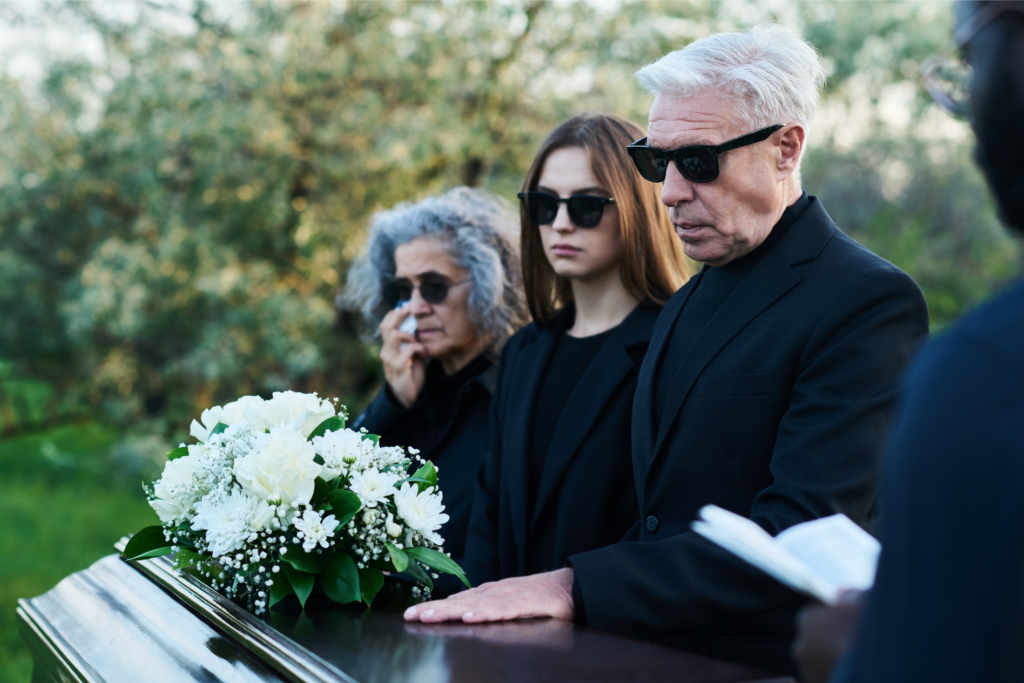
One of the most important parts of the funeral process in many Latino families is the wake, often called a velorio. This is a time when loved ones gather, offer condolences, pray, and remain close to the deceased and to one another. In some families, the atmosphere is quiet and reflective. In others, it includes a fuller flow of conversation, memory sharing, prayer, tears, and visible expressions of grief.
That time together matters deeply. It gives relatives a chance to arrive, embrace one another, and begin mourning in community. It also creates space for cultural and religious practices that may not fit neatly into one short church service. Some families want music played softly in the room. Some want a rosary. Some want candles, flowers, religious images, or a display of photographs that reflect the life of the person who died.
For many Puerto Rican families, the wake may be especially emotional and expressive, with open grief and strong family presence throughout the visitation. In some Dominican homes, the days surrounding the funeral may include a longer pattern of gathering and prayer. In some Colombian families, mourning can carry a more extended social and spiritual rhythm that continues after the service itself.
These customs do not all look the same. What they share is this: the wake is not only a waiting period before the funeral. It is part of the mourning itself.
Dominican Traditions and the Importance of Extended Mourning
Many Dominican families place strong importance on close family presence after a death. The period following the loss may include repeated gatherings, prayer, food, and time spent together well beyond the funeral day. For some households, the rhythm of mourning carries through nine days of remembrance, prayer, and emotional support.
That extended time matters because it reflects a larger truth about grief. The funeral is not the end of mourning. It is the beginning of a period when community needs to stay close. In Dominican families, this often means relatives arriving from different places, homes staying active with visitors, and a strong expectation that no one should carry grief alone.
When a funeral home understands that rhythm, the family often feels less pressure to fit everything into one formal service window. There is more room for prayer, cultural respect, and family participation without making the process feel rushed or impersonal.
Puerto Rican Traditions and the Power of Presence
Puerto Rican funeral traditions often place a strong emphasis on personal presence, visible love, and a meaningful farewell. Many families value the wake as a time of closeness and direct expression. Loved ones may want the person dressed in clothing that reflects who they were, surrounded by items, flowers, music, or symbols that feel familiar.
In some Puerto Rican homes, grief is expressed openly and fully. Tears, stories, prayer, embraces, and strong emotion are not seen as something to avoid. They are part of honoring the person honestly. That emotional openness can be deeply healing because it allows the family to mourn together instead of feeling pressure to stay composed for the comfort of others.
Families also often care deeply about the dignity of the presentation, the warmth of the gathering, and the feeling that the service reflects the person’s real life, not only a formal schedule. That may shape the wake, the church service, the music, the order of speakers, and the family’s decisions about burial or cremation.
Colombian Traditions and Ongoing Remembrance
For many Colombian families, funerals are shaped by both Catholic custom and a strong sense of family continuity. Prayer often matters deeply. So does the feeling that mourning should be honored with seriousness and respect, not rushed through. Some families continue remembrance through anniversary observances, Mass intentions, cemetery visits, and periods of modest living or black clothing after the death.
In practical terms, this means the funeral often sits inside a longer season of remembrance. The family may care not only about the wake and service, but also about how the person will be remembered in the weeks and months afterward. Photos, prayer cards, memorial Masses, and family gatherings may all carry real importance.
This longer view of mourning can help shape funeral planning in meaningful ways. Families may want room for traditional prayer, printed keepsakes, a church service, or a burial plan that gives them a place to return. These choices are not only logistical. They are ways of continuing the relationship with the person who died through memory and ritual.
Bilingual Support Changes Everything
One of the most important needs for many Latino families in Northeast Philadelphia is bilingual communication. This is not only about translation. It is about dignity. When a family is grieving, people should not have to struggle to understand paperwork, timing, pricing, or service options in a language that feels distant or unfamiliar.
A bilingual funeral home Philadelphia families rely on helps bridge generations in one room. Grandparents may prefer Spanish. Adult children may move between Spanish and English. Younger relatives may be more comfortable in English but want their elders fully included. Good bilingual support makes space for all of them.
It also matters during planning. Families often need help discussing burial or cremation, obituary wording, clergy coordination, visitation times, flower selections, cemetery arrangements, and memorial details. When those conversations happen clearly, trust grows. When language becomes a barrier, stress increases quickly.
That is one reason culturally informed funeral care matters so much in neighborhoods like Oxford Circle, Rhawnhurst, and Lawncrest. Families are not only looking for services. They are looking for understanding.
What Families Often Want Most From the Service
Although each family is different, many Dominican, Puerto Rican, and Colombian households want a few things above all. They want the service to feel respectful. They want family members to be able to participate. They want prayer or faith traditions included in a natural way. They want the person’s life reflected in the details. They want the staff to be patient and warm. They want the whole process explained clearly.
That may mean a traditional wake and church service. It may mean a viewing followed by burial. It may mean cremation with a memorial service later. It may mean music that carries emotional meaning, bilingual obituary wording, or a room set with family photographs and religious items. The right funeral home does not flatten those wishes into a generic template. It helps the family shape a farewell that feels personal and familiar.
For additional practical background, this guide to Hispanic funeral customs and family traditions offers a useful overview of wakes, religious services, novenas, burial or cremation choices, and the value of bilingual support.
How Fluehr Approaches Latino Families With Respect
John F. Fluehr & Sons has served Northeast Philadelphia families for generations, and that local history matters. A funeral home Oxford Circle Philadelphia families know, and a funeral home Rhawnhurst Philadelphia residents can reach easily, carries more than a convenient address. It carries community familiarity, neighborhood trust, and a steady understanding of how local families make difficult decisions together.
Fluehr’s services overview makes clear that the funeral home offers traditional funerals, graveside services, cremation, memorial services, clear pricing, and support from the first call through aftercare. That structure works well for Latino families because it leaves room for both practical guidance and cultural personalization. Whether a family wants a church service, a prayer filled wake, a bilingual conversation, or a more personalized memorial, the process starts with listening.
When families need immediate help or want to speak directly with someone about options, they can begin through contacting John F. Fluehr & Sons in Northeast Philadelphia. The funeral home is available to answer questions, guide immediate need decisions, and support planning with compassion and clarity.
A Funeral Should Feel Like Home to the Family
The strongest funeral services do not feel generic. They feel like the family. They sound like the family. They reflect the language, faith, customs, and emotional life of the people in the room. For Latino families in Northeast Philadelphia, that often means creating space for prayer, strong family presence, bilingual communication, and the kind of visible warmth that honors both grief and love at the same time.
That is why a funeraria Northeast Philadelphia families trust must offer more than technical skill. It must offer respect. It must be willing to learn the family’s customs, hear the names that matter, understand the role of church or clergy, and create room for a farewell that feels true to the person who died.
For Dominican, Puerto Rican, and Colombian families throughout the Lower Northeast, that kind of care matters deeply. It makes a hard day feel a little less distant. It helps the family feel seen. And in funeral service, being seen matters.
Estamos aquí para su familia. We are here for your family. John F. Fluehr & Sons can be reached at (215) 624-5150, available 24 hours a day.