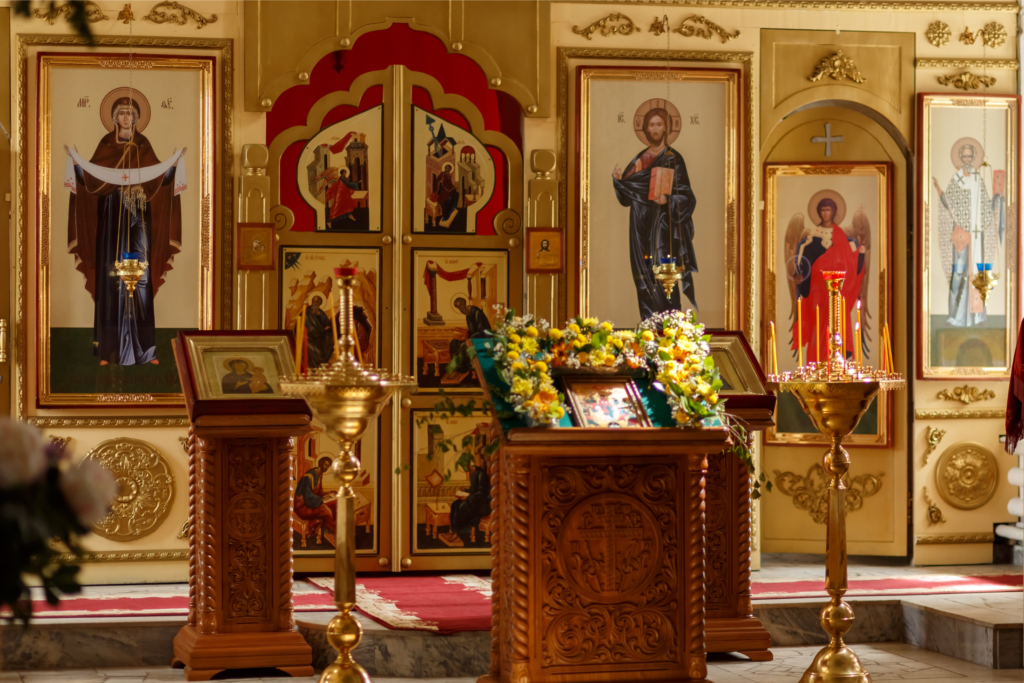
For many families in Bustleton, Somerton, Fox Chase, Rhawnhurst, and the wider Northeast, funeral traditions are not only cultural. They are deeply spiritual. They carry the language of faith, the memory of family, and the customs that helped shape life long before anyone reached Philadelphia. In Ukrainian Orthodox, Russian Orthodox, and many other Eastern Orthodox homes, the funeral is a sacred act of prayer, reverence, and final care.
That is why families often look for more than a funeral home when a death occurs. They look for people who understand the faith, the timing, the clergy, the church service, and the quiet details that matter so much in Orthodox life. For a family searching for a Ukrainian funeral home Philadelphia families trust, or for a Russian funeral home in Philadelphia guidance, clarity matters. So does experience.
At John F. Fluehr & Sons, traditional funerals are built around dignity, faith, and family custom. The funeral home’s approach to traditional funeral services in Philadelphia reflects that commitment, with room for clergy, prayer, visitation, procession, and graveside service in a way that supports each family’s beliefs and parish customs.
Why Orthodox Funeral Traditions Matter So Deeply
In Eastern Orthodox Christianity, the funeral is not treated as a simple public gathering or a social event with religious language added on top. It is prayer from beginning to end. It asks the Church to commend the departed to God, to comfort those who mourn, and to place death itself in the light of the Resurrection.
That spiritual meaning shapes everything else. It shapes the tone of the wake. It shapes the hymns and prayers in church. It shapes the burial. It shapes the memorial prayers in the days and months that follow. It also shapes why many Orthodox families still prefer a very traditional funeral instead of a loose or informal memorial.
The Orthodox Church in America explains this clearly in its guide to the Orthodox funeral service. The funeral vigil and funeral service are presented as solemn liturgical prayers of the Church, marked by Trisagion prayers, hymns for the departed, Scripture, a sermon, the final kiss, and prayers for eternal rest.
What Families Usually Expect First
When a death happens, many Orthodox families want a few things handled with care right away. They want the priest informed. They want the body treated with dignity. They want burial plans started promptly. They want the funeral home to understand that faith tradition is not a side note. It is the center of the process.
This is especially important for families tied to Ukrainian Orthodox funeral traditions, Russian Orthodox parishes, or Albanian Orthodox households in Northeast Philadelphia. Customs vary from parish to parish and family to family, but the shared pattern is strong. The family often wants close coordination with clergy from the first day forward.
That early coordination matters because the Orthodox funeral often includes more than one service. There may be prayers at the funeral home or church before the funeral day. There is the funeral itself. There are graveside prayers. Then there are memorial observances later. A funeral home with experience in Orthodox funeral services Philadelphia families need understands that the schedule is shaped by the Church, not only by convenience.
The Vigil, Wake, and Trisagion Prayers
In many Orthodox families, the first service connected to the funeral is the vigil or wake. This is often held at the funeral home, though in some cases it may take place in the church. Family and friends gather, offer condolences, stand in prayer, and spend time near the body of the person who died. The atmosphere is reverent and prayerful.
One of the key prayers often used at this stage is the Trisagion service. The Greek Orthodox Archdiocese describes the order clearly in its explanation of the Orthodox funeral service. It notes that the Trisagion is chanted at the funeral home or in the church on the evening before the funeral, on the day of the funeral, at the graveside, and again for memorial services.
For families unfamiliar with the term, the Trisagion is a shorter service of prayer for the departed. It gives the wake a clear spiritual structure. It also helps family and friends enter the mourning period through prayer instead of conversation alone.
In many Ukrainian and Russian Orthodox homes, this gathering matters a great deal. It is where relatives arrive, candles are lit, clergy begin the prayers of farewell, and the family starts to feel the support of both the parish and the wider community.
The Funeral Service in the Church
The funeral itself usually takes place in the church. This service is rich with prayer, chant, Scripture, and solemn beauty. It is not built around a eulogy driven format in the way many non Orthodox services are. The center is the Church’s prayer for the departed and for those who mourn.
The OCA describes the structure of the service in detail. It includes funeral hymns, Psalm 119, readings from First Thessalonians and the Gospel of John, a sermon, and the final kiss before dismissal. The hymns speak honestly about grief and death while still pointing toward the mercy of God and the hope of eternal life.
That tone matters. Orthodox funerals do not usually try to make death sound light or sentimental. They face it directly, then place it inside the faith of the Church. For families, that often feels deeply grounding. The prayers do not deny sorrow. They carry it.
In practical terms, this means the funeral home and the church need to work closely together. Timing, transport, clergy leadership, church customs, and burial arrangements all need to move in order. That is where a funeral home with experience serving Eastern European communities becomes especially valuable.
Why Burial Often Matters So Much
For many Orthodox families, burial holds deep importance. The body is treated with reverence, and the burial itself is not a side detail after the church service. It is part of the full act of farewell.
Orthodox sources often frame burial as the norm, even while some jurisdictions make limited room for exceptions under specific circumstances. The OCA notes that burial remains the image most in keeping with the Church’s understanding of the body awaiting the resurrection. GOARCH guidance is stricter in some contexts and states that the Church does not offer a funeral service for those who choose cremation.
Because parish practice and bishop level guidance may differ, families should always speak with their own priest early if cremation is being considered. That conversation is important, especially for families who want to stay faithful to Orthodox practice while also weighing practical realities.
For most traditional Orthodox funerals, though, burial remains the expected path. The procession to the cemetery and the graveside prayers remain essential parts of the day.
The Graveside Service and Final Farewell
After the church service, the family and clergy move to the cemetery. The graveside prayers are often brief compared with the church service, but they carry great emotional weight. This is the last public act of farewell before burial.
The GOARCH funeral explanation notes that the Trisagion is also prayed at the graveside. That continuity matters. The same prayer that begins the wake follows the family all the way to the cemetery. It creates one continuous line of prayer from the first gathering to the burial itself.
For families, this part of the day is often the hardest. It is also one of the most meaningful. The Church stays with the person to the grave. The priest prays with the family there. The community stands with them. Nothing about the farewell is rushed or treated as routine.
What Happens After the Funeral
In Orthodox life, remembrance does not end with burial. Memorial prayers continue after the funeral. The Greek Orthodox Archdiocese notes that the Trisagion and memorial services may be offered after the funeral, on the 3rd, 9th, and 40th days, then later at set intervals and annually.
These observances matter deeply in many Eastern European homes. They create a continuing rhythm of prayer. They also give families a structured way to carry grief through the weeks and months after the funeral. In some households, the later memorials are almost as important to family memory as the funeral day itself.
This is one reason an Orthodox funeral is best understood as a full season of mourning and prayer, not only one service. Families often need a funeral home that understands that larger picture and respects the church calendar, memorial customs, and the role of clergy after burial.
How These Traditions Live in Northeast Philadelphia
Bustleton, Somerton, Fox Chase, and Rhawnhurst are home to families whose ties stretch across generations and across continents. Some arrived recently. Some have been in Philadelphia for decades. Some speak English at home. Others move between English, Ukrainian, Russian, Albanian, or Church Slavonic in ways that reflect both heritage and daily life. The funeral often brings all of those layers together at once.
That is why a funeral home Bustleton families trust, or a funeral home Somerton households turn to, must do more than provide basic logistics. It needs cultural steadiness. It needs familiarity with Orthodox clergy. It needs patience with family structure, translation needs, church timing, and the expectations that often come with a very traditional burial service.
These are not small details. They shape whether a family feels understood in one of the hardest moments of life.
How Fluehr Supports Orthodox Families
John F. Fluehr & Sons has long served Northeast Philadelphia families with faith based, traditional funeral care. That matters for Orthodox households because the funeral home’s role often includes close coordination with clergy, church scheduling, viewing arrangements, hearse timing, procession planning, and cemetery details.
Fluehr’s traditional services page speaks to that structure directly. It describes visitation, clergy led ceremony, prayers, readings, music, procession, and graveside service as central parts of a traditional funeral. That framework fits well with the needs of many Orthodox families, even as each parish and family brings its own customs and language to the day.
When families need immediate guidance, or when they want to speak with someone who understands the flow of a traditional religious funeral, the clearest next step is contacting John F. Fluehr & Sons on Cottman Avenue. The funeral home lists its location at 3301 Cottman Avenue in Philadelphia and may be reached at (215) 624-5150.
A Funeral Tradition Rooted in Prayer, Family, and Reverence
Orthodox funeral customs remain some of the most prayer filled and tradition rich funeral practices in Christian life. For Ukrainian Orthodox funeral Philadelphia families, Russian Orthodox households, and many Albanian Orthodox families across Northeast Philadelphia, the service is not about style. It is about faithfulness. It is about praying the person into God’s mercy with reverence, truth, and hope.
That is why experience matters. A funeral home that understands Orthodox funeral services Philadelphia families need helps make room for clergy, custom, and family dignity from the first call through burial. John F. Fluehr & Sons has deep experience working with Eastern Orthodox clergy and families throughout the Northeast. Families may reach the funeral home at (215) 624-5150.